
Desserts
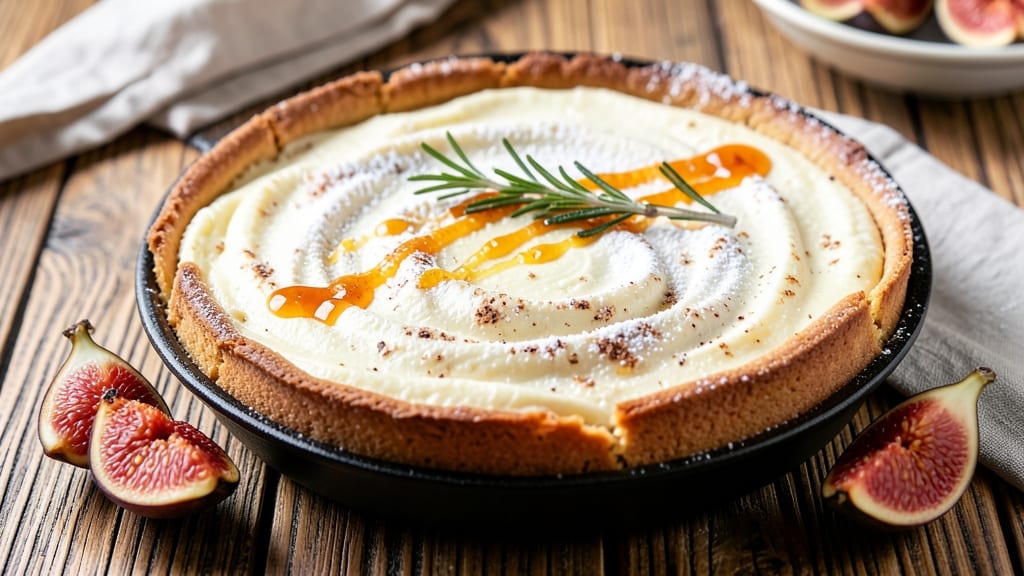
This authentic Italian baked ricotta cheesecake delivers the creamy, tangy richness of Italy’s most beloved dessert—without the jiggle of traditional versions. 💛 The secret lies in ricotta’s natural thickness, balanced by almond flour for structure, and a water bath that ensures silky perfection every time. I’ve perfected this recipe after years of testing, drawing from Sicilian traditions where ricotta takes center stage. What sets this apart is the almond crust, toasted to golden crunch, which complements the cheesecake’s velvety texture. Unlike New York-style versions, this dessert relies on no gelatin—just the natural fat in ricotta and a touch of lemon zest for brightness. The result? A slice that’s firm yet tender, with a delicate citrus finish that transports you to a Tuscan trattoria. Baking in a water bath prevents cracking while keeping the center cool and creamy—no waiting for it to set. The ricotta mixture is whipped just until smooth, ensuring no graininess, and the almond crust adds a satisfying contrast. Serve chilled with a drizzle of honey or fresh berries for an authentic touch. This recipe is foolproof for beginners but impressive enough for gatherings. The almond crust can be made ahead, and the cheesecake keeps beautifully in the fridge for up to 5 days. Let’s create something truly special—no shortcuts, just tradition.
Ingredients for authentic italian baked ricotta cheesecake
Authentic Italian ingredients transform simple pantry staples into a velvety dessert with Sicilian roots.
| Ingredient | Amount | Notes |
|---|---|---|
| Whole-Milk Ricotta Cheese 🧀 | 32 oz | Fresh, full-fat preferred |
| Large Eggs 🥚 | 4 whole | Room temperature for blending |
| Granulated Sugar 🍚 | 1 cup | Superfine preferred for smoothness |
| Unsalted Butter 🧈 | ½ cup | Softened, European-style preferred |
| Almond Flour 🌰 | 2 cups | Finely ground, no almond pieces |
| Light Brown Sugar 🍚 | ½ cup | Packed, for crust sweetness |
| Fine Sea Salt 🧂 | ½ tsp | Diamond Crystal preferred |
| Lemon Zest 🍋 | 1 tbsp | Fresh, organic preferred |
| Vanilla Extract 🌿 | 1 tsp | Pure Madagascar preferred |
| All-Purpose Flour 🌾 | ¼ cup | For crust binding |
| Extra-Virgin Olive Oil 🫒 | 2 tbsp | For crust moisture |
| Ground Almonds 🌰 | 1 cup | Toasted for enhanced flavor |
| Granulated Sugar 🍚 | ¼ cup | For water bath layer |
The ricotta is the heart of this dessert—fresh, whole-milk ricotta from a specialty cheese counter (like Whole Foods or Eataly) delivers the richest texture. Avoid pre-drained varieties, which lose moisture. For the almond crust, blanched almond flour from Bob's Red Mill ensures fine texture without grit. Toast your ground almonds in a dry pan until golden for deeper flavor. The lemon zest should be bright yellow, not pale—indicating freshness. If using store-bought zest, check for additives; organic is best. For vanilla, Madagascar bourbon vanilla adds complexity beyond imitation extracts.
No almond flour? Blanch and grind your own almonds—it's worth the effort. Substitute brown sugar with white sugar plus 1 tsp molasses for the crust. For a lighter texture, replace 4 oz ricotta with Greek yogurt (equal parts). The water bath requires a deep baking dish—glass or ceramic works best. If your pan is too shallow, nestle the springform inside a larger roasting pan. For extra insurance against cracking, chill the batter for 1 hour before baking. The butter should be soft but not melted—press it into the crust mixture to bind properly.
The almond crust keeps at room temperature for 3 days in an airtight container, while the assembled cheesecake thrives in the fridge for up to 5 days. For longer storage, wrap tightly and freeze for 3 months—thaw overnight in the fridge. Serve chilled with honey drizzle or fresh berries to complement the citrus notes. The crust can be baked ahead and stored separately for 2 days. Always bring the cheesecake to room temperature before slicing to maintain its silky texture—this prevents crumbling.
Why You'll Love This Recipe
- No-Fuss Layers: I swear by this recipe because it’s three bowls max—just fold the ricotta, eggs, and sugar together, then dump it into a buttered pan lined with almond flour crumbs. No food processor, no whisking until your arm falls off, just mix until it’s mostly smooth (lumps? Don’t stress).
- Creamy Yet Crisp: That almond flour crust? It’s the star—nutty, toasty, and so much better than graham crackers. And the ricotta? Rich but light, with just enough sugar to balance the eggy depth. Honestly, it’s the kind of dessert that makes you pause mid-bite and think, “Wait, how is this so good?”
- Weeknight Hero: Between us, this is my go-to for dinner parties when I don’t want to slave over a soufflé. Serve it warm with a drizzle of honey or cold with berries—no one will guess it took less time than ordering takeout. (Yes, even on a Tuesday night.)
- Leftovers? Better: The best part? It actually improves the next day. The crust softens just enough to soak up the ricotta’s creaminess, and it reheats in five minutes in the microwave (or 10 in the oven). I’ve fed a crowd with two pans, sliced it for lunchboxes, and still had pieces for breakfast—no waste, all wins.
Step-by-step instructions for authentic Italian baked ricotta cheesecake
Master the traditional Italian technique that delivers that signature silky texture and perfect almond crust.
👨🍳 Step 1: Prepare the Almond Crust with Precision
In a food processor, combine the 1 cup ground almonds, 2 cups almond flour, 0.5 cup light brown sugar, 0.5 tsp fine sea salt, and 2 tbsp extra-virgin olive oil. Pulse until the mixture resembles coarse sand with pea-sized clumps remaining—this ensures proper texture without over-processing.
Press the mixture firmly into a 9-inch springform pan, tapping the pan gently on the counter to eliminate air pockets. Bake at 350°F for 12-15 minutes until the edges are light golden brown. Real talk: Don't skip this pre-baking step—it prevents soggy crust and creates that essential crunch. Let the crust cool completely before adding the filling.
🍳 Step 2: Blend the Ricotta Filling to Perfection
In a stand mixer fitted with the paddle attachment, blend the 32 oz whole-milk ricotta cheese on low speed for 2 minutes to break down any lumps. This step is non-negotiable for that authentic Italian silky texture—those lumps translate to graininess in the final dessert.
Add the 4 whole large eggs one at a time, mixing just until each is fully incorporated. Then add the 1 cup granulated sugar, 1 tbsp lemon zest, 1 tsp vanilla extract, and 0.25 cup all-purpose flour. Mix on low speed for 3-4 minutes until completely smooth and pale yellow. Here's the thing—overmixing introduces air bubbles that can cause cracks, but undermixing leaves texture issues. Aim for that perfect balance.
🥘 Step 3: Assemble and Bake with Water Bath Technique
Spread the ricotta mixture evenly over the cooled almond crust. Place the springform pan in a larger baking dish and pour hot water into the dish until it reaches midway up the sides of the springform pan. This water bath creates gentle, even heat distribution that prevents cracking.
Bake at 325°F for 50-60 minutes until the center is just set but still slightly jiggly—about 1-2 millimeters of movement when gently shaken. The edges should be golden brown but not over-browned. I know it seems counterintuitive, but resist the urge to open the oven door early. Temperature fluctuations are the #1 cause of cracks in Italian ricotta cheesecakes.
⏰ Step 4: Cool and Rest for Optimal Texture
Remove the cheesecake from the water bath and let it cool in the pan for 1 hour at room temperature. Then refrigerate uncovered for at least 4 hours—preferably overnight. This gradual cooling process allows the proteins to fully set while maintaining that signature Italian silky texture.
Once fully chilled, run a thin knife around the edges to loosen, then release the springform ring. The cheesecake should hold its shape when gently lifted. If you're serving it warm (which I highly recommend for that authentic trattoria experience), let it sit at room temperature for 30 minutes before slicing. The contrast between the warm filling and cool crust is what makes this dessert truly special.
🍽️ Step 5: Serve with Traditional Italian Presentation
Slice the cheesecake into 8 even wedges using a long, sharp knife that's been dipped in hot water and wiped clean between cuts. This ensures clean slices every time. Garnish each serving with an additional sprinkle of lemon zest and a drizzle of extra-virgin olive oil for that authentic Italian touch.
For maximum impact, serve with a side of fresh berries or a scoop of vanilla gelato. The acidity of the berries cuts through the richness of the ricotta, while the gelato adds that perfect creamy contrast. Each bite should deliver that melt-in-your-mouth texture with a satisfying crunch from the almond crust—this is what makes this recipe truly authentic.
Pro Tips For Making Authentic Italian Baked Ricotta Cheesecake
- Whisk Ricotta Like Mad: I learned this the hard way—ricotta loves air, and if you’re gentle, it’ll stay dense. Beat that cheese for a solid 3–5 minutes until it’s light and fluffy, like a cloud that won’t collapse. Use a hand mixer on medium-high, and don’t stop until the texture doubles in volume.
- Salt the Butter First: Skip this, and your cheesecake will taste flat. Mix the unsalted butter with the sugar before adding it to the ricotta—this way, the salt dissolves evenly. Trust me, your taste buds will notice the difference, especially if your ricotta is fresh and mild.
- Don’t Overmix the Eggs: After folding in the eggs, stir just until combined—overmixing turns the batter into a gluey mess. Use a spatula and lift gently from the bottom of the bowl. The batter should look marbled, not uniform, or you’ll end up with a dense, rubbery center.
- Bake Low and Slow: The oven’s hot spot is your enemy here. Preheat to 325°F (160°C) and bake on the middle rack—any hotter, and the top browns before the center sets. If the edges are golden but the middle jiggles, tent it with foil and let it sit for 10 minutes. No peeking!
Troubleshooting this dish
Cracked Top Fix
If you see cracks forming during baking, don't panic! The water bath helps prevent this, but if it happens, it's usually due to oven temperature fluctuations. Immediately reduce your oven temperature to 300°F and continue baking for 10-15 minutes. Once cooled, cover the cracks with a thin layer of lemon curd or ricotta whipped with powdered sugar—this creates a smooth surface. For prevention, chill the batter for 1 hour before baking and avoid opening the oven door during the first 45 minutes. 💡
Soggy Crust Solution
A soggy crust happens when moisture seeps through. To fix it, ensure your almond crust is fully baked (golden edges) and completely cooled before adding the filling. For future attempts, press a thin layer of melted butter (about 1 tbsp) onto the cooled crust before adding the ricotta mixture—this creates a moisture barrier. If it's already soggy, invert the cheesecake onto a plate, remove the crust, and re-crust with a fresh layer of toasted almond flour mixed with 1 tbsp sugar. 🌰
Grainy Texture Trouble
Graininess in ricotta cheesecake usually means the ricotta wasn't blended enough or was too lumpy. To fix it, blend the 32 oz ricotta with 2 tbsp heavy cream for 3-4 minutes until completely smooth. For prevention, always use whole-milk ricotta (not low-fat) and blend it at low speed for 2 minutes before adding other ingredients. If the texture is already grainy, spread a layer of whipped mascarpone on top before serving—it adds creaminess that masks the issue. 🧀
Underbaked Center
An underbaked center (jiggly when done) means the cheesecake needs more time. Return it to the oven at 300°F for 10-15 minutes, then let it cool gradually. For future bakes, check doneness by inserting a long knife near the center—it should come out warm but clean, not wet. If the center is still too soft after reheating, chill it for 2 hours and try again. Pro tip: Use a thermometer—the internal temp should reach 150°F. 🌡️
Crust Separation
If the crust and filling separate, it’s usually due to moisture or improper pressing. To fix it, gently press the filling into the crust with a spatula, then smooth the top. For prevention, press the crust firmly into the pan and let it cool completely before adding the filling. If separation happens, spread a thin layer of ricotta-cream cheese blend (equal parts) over the top and bake at 325°F for 10 minutes to re-bond the layers. 🔄
Weeping or Syrupy Top
This occurs when the cheesecake releases too much moisture during cooling. To fix it, chill the cheesecake uncovered for 4 hours to allow excess moisture to evaporate. For prevention, ensure your ricotta is not overly watery (drain if needed) and don’t overmix the batter. If weeping happens, sprinkle the top with powdered sugar or toasted almond slices before serving to absorb the moisture. 💧
Nutrition facts
Frequently asked questions
Can I substitute almond flour with regular flour for the crust?
While you can use all-purpose flour, the texture won't be authentic. For a closer match, mix 1.5 cups flour with 0.5 cup cornstarch to mimic almond flour's lightness. The crust will be less crunchy and more crumbly, but it'll still work in a pinch. For best results, stick with almond flour—it's what gives this dessert that signature Italian crunch.
Why does my ricotta cheesecake have a grainy texture?
Graininess usually means the ricotta wasn't blended enough or had lumps. Always blend 32 oz whole-milk ricotta at low speed for 2 minutes before adding other ingredients. If it's already grainy, blend the filling with 2 tbsp heavy cream for 3-4 minutes until completely smooth. For prevention, use fresh ricotta and avoid pre-drained varieties.
How do I prevent cracks in the cheesecake?
Cracks happen from temperature fluctuations or overmixing. First, chill the batter for 1 hour before baking. Second, avoid opening the oven door during the first 45 minutes of baking. Third, use the water bath technique to distribute heat evenly. If cracks appear, cover them with a thin layer of lemon curd or whipped ricotta before serving.
Can I make this cheesecake ahead of time?
The almond crust can be baked and stored at room temperature for 3 days in an airtight container. The fully assembled cheesecake keeps beautifully in the fridge for up to 5 days. For longer storage, wrap it tightly and freeze for 3 months. Thaw overnight in the fridge before serving. The flavors actually improve with time!
What's the best way to serve this Italian ricotta cheesecake?
Serve it chilled with a drizzle of extra-virgin olive oil and a sprinkle of lemon zest for that authentic Italian touch. For extra flair, pair it with fresh berries or a scoop of vanilla gelato. The contrast of warm gelato with cool cheesecake is pure Italian trattoria magic!