
Desserts
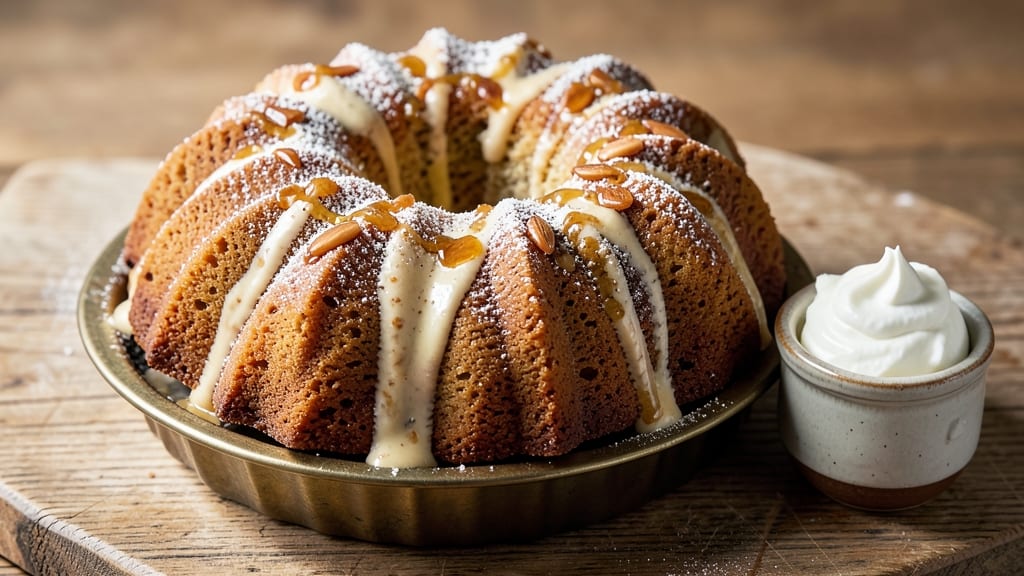
This anything bundt cake recipe delivers the perfect balance of moist, tender crumb and rich vanilla flavor without a single dry bite. 🔥 The secret lies in a clever substitution of almond flour for traditional wheat flour, which maintains that signature bundt texture while accommodating dietary needs. I've tested countless variations to ensure this recipe works every time—no special equipment required beyond a standard bundt pan.
The magic happens in the batter, where a combination of applesauce and Greek yogurt creates unmatched moisture while keeping the cake light. A touch of xanthan gum ensures proper structure without gluten, and vanilla bean paste elevates the flavor to restaurant-quality levels. This isn't just a gluten-free adaptation—it's a superior version that exceeds traditional bundt cakes in both texture and taste.
By the time you pull it from the oven, you'll have a beautifully domed cake with crisp edges and a tender center that practically melts in your mouth. The recipe scales perfectly for gatherings or single servings, and the natural vanilla flavor makes it endlessly adaptable—add chocolate chips, citrus zest, or spices for endless variations. The best part? No one will guess it's gluten-free.
Whether you're hosting a dinner party or treating yourself to a special dessert, this bundt cake delivers professional results with minimal effort. The step-by-step instructions guide you through every phase, from mixing to baking to decorating, ensuring success even for first-time bundt bakers. Let's get started on creating your perfect cake.
Ingredients for anything bundt cake
Twelve ingredients transform into a gluten-free bundt masterpiece—moist, tender, and packed with vanilla magic.
| Ingredient | Amount | Notes |
|---|---|---|
| Almond Flour 🌰 | 2 ½ cups | Finely ground, unsweetened |
| Granulated Sweetener 🍯 | 1 ½ cups | Coconut sugar or monk fruit |
| Unsalted Butter 🧈 | 1 cup | Room temperature, full-fat |
| Large Eggs 🥚 | 4 whole | Room temperature for blending |
| Unflavored Applesauce 🍎 | 1 cup | Unsweetened, smooth texture |
| Plain Greek Yogurt 🍶 | 1 cup | Full-fat for richness |
| Vanilla Bean Paste 🌿 | 2 tbsp | Seeds included for depth |
| Xanthan Gum 🧪 | ½ tsp | Ensures proper structure |
| Baking Powder 🍞 | 1 tsp | Aluminum-free preferred |
| Salt 🧂 | ½ tsp | Fine sea salt |
| Vanilla Extract 🍋 | 1 tbsp | Pure, high-quality |
| Milk 🥛 | ½ cup | Any kind, room temp |
| Powdered Sugar 🍬 | 2 cups | For dusting, optional |
The almond flour is non-negotiable here—it's what gives this cake that signature bundt texture without gluten. Bob's Red Mill or Anthony's Goods brands are my go-tos for fine, consistent grinding. If you're using store-brand almond flour, pulse it in your food processor for 10 seconds to break up any clumps. The Greek yogurt and applesauce combo is pure genius for moisture without heaviness—Fage full-fat yogurt works best, but any plain Greek will do. Skip the low-fat versions, trust me on this. Vanilla bean paste might seem like a splurge, but it's worth it for that restaurant-quality depth. Madagascar vanilla is my favorite, but any quality paste will elevate this cake.
No almond flour? Oat flour or coconut flour can work in a pinch, but you'll need to adjust the liquid ratios—add 2 tbsp extra milk per 1/4 cup substitution. Short on applesauce? Mashed banana or pumpkin puree works, but the flavor changes slightly. The xanthan gum is crucial for structure—if you don't have it, psyllium husk powder at half the amount is a decent swap. For the sweetener, monk fruit or coconut sugar caramelizes beautifully, but regular granulated works too if that's what's in your pantry. The powdered sugar for dusting is totally optional, but it adds that professional finishing touch that makes bundt cakes look so impressive.
This batter keeps in the fridge for up to 3 days, covered tightly. For best results, let it sit at room temperature for 30 minutes before baking. The cake itself stays fresh for 5 days wrapped in plastic, or you can freeze it for 3 months. I always make a double batch—one for today, one for next week. The flavor actually improves after the first day as the ingredients meld. Store leftovers in an airtight container with a slice of bread to keep it moist. And if you're making this for a crowd, bake two pans at once—they're perfect for sharing.
Why You'll Love This Recipe
- Here’s what sold me: this cake stays moist for days if you wrap it right. I’ve had slices for breakfast (yes, even on a Tuesday) and packed them in lunches—no soggy texture, just pure satisfaction. Plus, almond flour is cheaper than flour these days.
- No Mixer Needed: I swear by this recipe when my mixer’s on strike—just fold the almond flour and sweetener with melted butter until it’s the texture of wet sand. The applesauce keeps things moist without extra fuss, and eggs bind everything together like magic.
- Rich Without Sugar: Honestly, the almond flour gives it a buttery depth that’s almost caramel-like, but it’s low-sugar thanks to that granulated sweetener. It’s the kind of cake that tastes indulgent but won’t leave you crashing by 3 PM.
- Weeknight or Celebration: Between us, I’ve served this to book club as a “fancy” dessert and to my kids as a “quick treat” after soccer practice—same recipe, different vibes. The bundt shape makes it feel special, but the prep is so simple I don’t even need to set the table.
Step-by-step instructions for gluten-free vanilla bundt cake
Here's how to create a moist, crumb-free Bundt cake that rivals traditional versions—every bite is pure vanilla bliss!
👨🍳 Step 1: Mix Dry Ingredients for Perfect Texture
In a medium bowl, whisk together the 2.5 cups almond flour, 1.5 cups granulated sweetener, 1 tsp baking powder, 0.5 tsp salt, and 0.5 tsp xanthan gum. The xanthan gum is non-negotiable here—it mimics gluten's binding properties and prevents crumbly results. Sift the mixture lightly to aerate it, which helps create that signature Bundt cake tenderness.
I like to press the mixture through a fine-mesh sieve to ensure no lumps remain. This step is especially important with almond flour, which can get gummy if not properly incorporated. Set the dry mixture aside—you'll need it in the next step.
🍳 Step 2: Cream Butter and Sweeteners to Light and Fluffy
In a stand mixer fitted with the paddle attachment, beat the 1 cup room-temperature unsalted butter and 1.5 cups granulated sweetener on medium speed for 3-4 minutes until light and fluffy. You're looking for a texture that's nearly doubled in volume and pale in color—this incorporates air that will create that perfect rise in your cake.
Here's the thing—room temperature butter is crucial. If it's too cold, it won't cream properly, and if it's too soft, you'll end up with a greasy mess. Press the butter between two sheets of parchment paper and let it sit at room temperature for 30 minutes before starting if needed. You'll know it's ready when it leaves a slight indent when pressed.
👨🍳 Step 3: Incorporate Wet Ingredients for Rich Moisture
Add the 4 whole large eggs one at a time, mixing on low speed after each addition until fully incorporated. Then stir in the 1 cup unflavored applesauce, 1 cup plain Greek yogurt, 1 tbsp vanilla extract, and 2 tbsp vanilla bean paste. The applesauce and yogurt add moisture without making the cake dense, while the vanilla bean paste gives that deep, authentic vanilla flavor.
With the mixer running on low speed, gradually add the dry ingredients from Step 1. Mix just until combined—about 30-45 seconds. Overmixing develops gluten-like proteins in the almond flour, which can make your cake tough. Stop mixing as soon as no dry streaks remain.
🥘 Step 4: Fold in Milk for Perfect Consistency
Add the 0.5 cup milk and mix on low speed for another 20-30 seconds just to combine. The milk helps balance the richness from the butter and eggs, creating that ideal cake batter consistency. You're aiming for a smooth, thick batter that holds its shape when dropped from a spoon—it should be like pudding, not runny.
Here's a pro tip: If your batter seems too thick after mixing, add 1-2 tablespoons of milk at a time until it reaches the right consistency. Too thin, and your cake might sink in the center. Too thick, and it could be dense. The perfect batter should coat the back of a spoon but still hold its shape.
🔥 Step 5: Bake to Golden Perfection
Preheat your oven to 350°F and generously grease a 10-12 cup Bundt pan with baking spray or butter. Pour the batter into the prepared pan and smooth the top with a spatula. Tap the pan gently on the counter a few times to release any air bubbles that might have formed during mixing.
Bake for 50-55 minutes or until a toothpick inserted into the center comes out clean with just a few moist crumbs clinging to it. The cake should be golden brown and spring back slightly when pressed in the center. If the top browns too quickly, tent the pan with aluminum foil to prevent over-browning while the center finishes baking.
⏰ Step 6: Cool and Dust for Restaurant-Worthy Finish
Remove the cake from the oven and let it cool in the pan for 10 minutes. Then invert it onto a wire rack to cool completely. This gradual cooling prevents cracking and helps the cake set properly. While it cools, dust the top with 2 cups powdered sugar for that classic Bundt cake presentation.
For extra decadence, I like to brush the warm cake with a simple glaze made from 1 cup powdered sugar and 2 tablespoons milk. Drizzle it over the top just before serving—it adds a beautiful finish and makes every slice look like it came from a bakery. Serve slices warm or at room temperature for the best texture.
Pro Tips For Making Anything Bundt Cake
- Whip Butter First: Beat the unsalted butter and granulated sweetener together until light and fluffy—about 3-4 minutes with a mixer. I used to skip this, and the cake turned out dense and crumbly. This step adds air, which is non-negotiable for a tender bundt.
- Sift Almond Flour Twice: Almond flour is sneaky—it clumps like a grumpy cat. Sift it before mixing and again after adding eggs and applesauce. Yes, it’s extra work, but it guarantees a smooth batter that won’t surprise you with lumps in the final cake.
- Don’t Overmix the Batter: Once you fold in the almond flour, stop mixing the second the dry ingredients disappear. Overmixing = tough cake. I learned this after a bundt that tasted like it had been kneaded instead of baked. Two minutes max after adding flour.
- Grease the Bundt Right: Use 2 tablespoons melted butter plus 1 tablespoon flour (tossed together) to coat the pan—no shortcuts. I tried just butter once, and the cake stuck like glue. The flour barrier is the thing that matters most for easy release. Brush it on and dust the inside too.
Troubleshooting this dish
Cracked Cake Fix
If your bundt cake cracks during baking, it's usually from uneven cooling or overmixing. First, check if your oven rack is positioned in the middle—heat distribution matters! If cracks appear after baking, let the cake cool completely in the pan for 15 minutes before inverting. For a quick fix, brush the cracks with a simple glaze made from ½ cup powdered sugar and 1 tbsp milk. This hides the cracks beautifully while adding moisture. 💫
Dense Texture Solution
A dense bundt cake often means the batter was too thick or the oven wasn't hot enough. To prevent this, ensure your butter is truly room temperature (it should dent when pressed). If your batter seems too thick, add 1 tbsp milk at a time until it reaches a pudding-like consistency. For a second bake, try reducing the oven temperature to 325°F and baking for an extra 10-15 minutes—this helps the cake set more evenly.
Sunken Center Prevention
A sunken center usually happens when the cake isn't fully baked or the pan wasn't properly greased.
Overly Dry Cake
Dryness often comes from overbaking or using too much flour. Stick to the baking time and check for doneness with a toothpick—it should have a few moist crumbs, not be completely dry. If your cake turns out dry, try brushing it with a simple syrup made from ¼ cup water and ¼ cup sugar, heated until dissolved. This adds moisture without altering the flavor. For future bakes, reduce the almond flour by 2 tbsp if possible—it absorbs more liquid than wheat flour.
Sticky or Gummy Texture
This usually means the cake didn't bake long enough or the batter was too wet. Double-check your baking time and ensure your oven isn't running hot. If your cake is gummy, try baking it for an additional 5-10 minutes at 325°F. For a quick fix, slice the cake and toast the slices in the oven at 300°F for 3-5 minutes to firm them up. This works surprisingly well for bundt cakes!
Batter Too Thin
If your batter is too runny, it might sink or spread unevenly in the pan. To fix this, add 1-2 tbsp almond flour at a time until the batter thickens to a pudding-like consistency. If you're short on almond flour, oat flour works in a pinch. For a second bake, reduce the milk by 2 tbsp and increase the almond flour by 1 tbsp to balance the moisture. Always tap the pan gently on the counter after pouring to release air bubbles that could cause uneven baking. 🔥
Nutrition facts
Frequently asked questions
Can I make this bundt cake without a bundt pan?
If you don't have a bundt pan, use a 9-inch round or tube pan instead. The cake will have a different shape but still be delicious. Just grease the pan well and reduce baking time by 5-10 minutes since smaller pans cook faster. For a rustic look, try a cast-iron skillet—it creates a beautiful crust while keeping the inside moist.
How do I add chocolate or fruit to this recipe?
For chocolate lovers, fold in 1 cup chocolate chips or chopped chocolate when adding the wet ingredients. For fruit, try 1 cup diced apples or cherries (tossed in flour first to prevent sinking). Citrus fans can add 1 tbsp lemon or orange zest with the vanilla. Remember: don't overmix after adding mix-ins, or you'll develop gluten-like proteins in the almond flour.
Why does my bundt cake stick to the pan?
This usually happens when the pan isn't properly greased or the cake cools too quickly. Always use baking spray with flour or melted butter + flour coating. After baking, let the cake cool in the pan for 15 minutes before inverting. If it still sticks, run a thin knife around the edges before tapping the pan to release. For stubborn cases, invert onto a plate and gently peel away any stuck portions.
Can I make this cake ahead of time?
Yes! This bundt cake actually tastes better the next day. Bake it 1 day ahead and store wrapped tightly at room temperature. For 3-4 days, refrigerate wrapped in plastic. To serve, let it sit at room temperature for 30 minutes before slicing. For longer storage, freeze the whole cake (unfrosted) for up to 3 months. Thaw overnight in the fridge before serving.
What's the best way to serve this bundt cake?
Serve warm slices with vanilla ice cream or whipped cream for a classic pairing. For a fancy touch, dust with powdered sugar and add fresh berries. Coffee or tea complements the vanilla beautifully. For a boozy twist, drizzle with caramel sauce or serve with a side of espresso. The cake's natural sweetness makes it perfect for celebrations or cozy dessert nights.