
Desserts
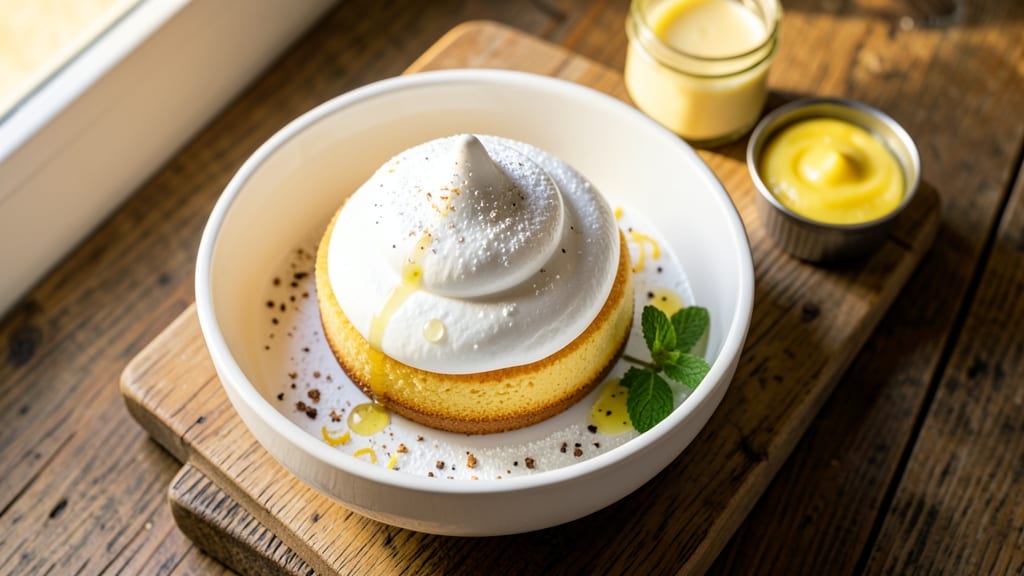
This angel cake recipe UK delivers the signature light-as-air texture that makes it a dessert classic. The secret lies in folding whipped egg whites into a delicate batter, creating a cake so tender it practically melts in your mouth. Perfectly paired with whipped cream or fresh berries, this traditional recipe has been a British favorite for generations.
What sets this recipe apart is its simplicity—just a few ingredients combine to create a cake that's impossibly light yet sturdy enough to hold layers of jam or cream. The key technique involves carefully folding egg whites to maintain that signature airy structure, ensuring every slice is as delicate as it is delicious.
Baked at a gentle 325°F (160°C), this angel cake develops a subtle golden hue while staying perfectly moist inside. The result is a dessert that's elegant enough for special occasions but simple enough for everyday indulgence. Whether served with clotted cream or fresh strawberries, it's a timeless treat.
For an authentic UK touch, consider using self-raising flour and measuring ingredients in grams for precision. The cake's versatility makes it ideal for celebrations, afternoon teas, or a luxurious dessert any time of year. Ready to create this light-as-air delight?
Ingredients for angel cake recipe uk
Eleven ingredients, one technique: folding egg whites to perfection for that iconic British angel cake texture.
| Ingredient | Amount | Notes |
|---|---|---|
| Large Egg Whites 🥚 | 12 whole | Room temperature, separated from yolks |
| Granulated Sugar 🍚 | 1 ½ cups | Superfine preferred for smooth texture |
| Self-Raising Flour 🌾 | 1 ½ cups | UK standard for authentic texture |
| Unsalted Butter 🧈 | ½ cup | Cold, cubed for folding |
| Vanilla Extract 🌿 | 1 tsp | Pure Madagascar bourbon preferred |
| Lemon Juice 🍋 | 1 tbsp | Freshly squeezed, for brightness |
| Salt 🧂 | ¼ tsp | Fine sea salt for balance |
| Heavy Cream 🥛 | 1 ½ cups | Cold, for whipped cream topping |
| Powdered Sugar 🍚 | ½ cup | For whipped cream sweetening |
| Fresh Strawberries 🍓 | 1 lb | Hull-free, sliced for garnish |
| Clotted Cream 🥛 | ½ cup | Traditional UK pairing |
The egg whites are non-negotiable—room temperature is critical for maximum volume. British supermarket brands like Waitrose or Tesco carry large eggs ideal for this recipe, but any fresh, free-range eggs work. Self-raising flour is essential for authentic texture; Doves Farm or Andrews' Own are reliable UK brands. The butter should be cold—fold it in gently to maintain airiness. For the vanilla, Madagascar bourbon extract adds depth without overpowering. If you can't find it, pure vanilla extract works in a pinch, but the flavor profile will differ slightly.
No self-raising flour? Combine 1.5 cups all-purpose flour with 1.5 tsp baking powder for a substitute. Short on egg whites? Pasteurized liquid egg whites from the dairy aisle work, but fresh is always superior. The whipped cream topping can be made with heavy whipping cream or double cream—UK terminology for heavy cream. For a lighter texture, whip the cream with powdered sugar and a splash of vanilla. Strawberries can be swapped for raspberries or blackberries, but the acidity balances the cake's sweetness perfectly. Clotted cream is traditional, but whipped cream with a touch of honey is a suitable alternative if unavailable.
Store the cake in an airtight container at room temperature for up to 3 days—it keeps best at a cool, consistent temperature. The whipped cream should be prepared fresh, but you can make it a day ahead and store it in the fridge, rewhipping before serving. Fresh strawberries last 3-4 days in the fridge, while clotted cream will keep for up to 2 weeks unopened. For a restaurant-quality finish, dust the cake with powdered sugar just before serving. This dessert is best enjoyed the day it's made, but the flavors deepen slightly overnight.
Why You'll Love This Recipe
- No Whisk Fatigue: I swear by this recipe because the egg whites barely need a beat—just a quick fold, and the self-raising flour does all the heavy lifting. Honestly, I’ve made angel cake after a 10-hour shift, and it still comes out light as a cloud.
- Butter-Soft Magic: That pat of unsalted butter in the batter? It’s the secret. The cake’s got this delicate crumb and a whisper of vanilla that makes it taste like a bakery treat, not something you threw together. (Yes, even on a Tuesday night.)
- Tea Time Hero: Slice it thin, and it’s my go-to with Earl Grey or a strong brew—no fuss, no crumbs everywhere. Between us, it’s the only cake I trust to impress guests without me stressing over layers or frosting.
- Leftovers? No Problem: This cake stays fresh for days, and I’ve even reheated slices in the toaster for a quick breakfast. Budget-friendly too—uses pantry basics, and the egg whites stretch further than you’d think. (My daughter picks out the driest slice, but still asks for seconds.)
Step-by-step instructions for angel cake with whipped cream pairing
Master this classic British technique for a cake so light it practically disappears on your tongue.
Prepare Egg Whites for Maximum Volume
Separate the 12 whole large egg whites from yolks, ensuring no trace of yolk remains—even the tiniest bit will prevent proper whipping. Place the whites in a spotlessly clean, grease-free bowl; any residue will interfere with the meringue formation. I like to use a fine-mesh sieve lined with a coffee filter to remove any stubborn yolk fragments.
Add the 0.25 teaspoon salt to the egg whites and whisk gently until dissolved. Gradually add the 1.5 cups granulated sugar while whisking continuously on low speed. This gradual incorporation is crucial—adding all sugar at once can cause the meringue to collapse. Once all sugar is incorporated, increase speed to medium-high and beat for 5 minutes until stiff, glossy peaks form that hold their shape when the whisk is lifted.
Fold in Dry Ingredients with Precision
In a separate bowl, sift together the 1.5 cups self-raising flour with the 0.5 cup cold cubed butter. Gently fold this mixture into the egg white meringue using a spatula in a "J" motion, cutting through the center and folding from the bottom up. This technique incorporates air while maintaining the delicate structure we've worked so hard to create.
Add the 1 tablespoon lemon juice and 1 teaspoon vanilla extract next, folding gently to distribute evenly. The lemon juice adds brightness that balances the richness, while the vanilla enhances the overall flavor profile. Be careful not to overmix—just until the batter is smooth and uniform in color. The batter should be thick but still pourable; if it's too stiff, the cake may be dense.
Bake for Perfect Rise and Texture
Preheat your oven to 350°F (175°C) and grease two 6-inch round cake pans with butter, then dust with flour. Divide the batter evenly between the pans and smooth the tops with a spatula. Bake for 25-30 minutes until the cakes spring back when touched lightly in the center and a toothpick inserted comes out clean.
I find it helpful to tent the pans with foil after 15 minutes to prevent over-browning while ensuring even cooking. The cakes should rise dramatically in the oven, creating that signature angel food cake texture. Remove from oven immediately and let cool in the pans for 5 minutes before inverting onto a wire rack to cool completely. This inversion helps maintain the cake's height and delicate crumb.
Prepare the Whipped Cream Topping
In a chilled bowl, whip the 1.5 cups cold heavy cream with the 0.5 cup powdered sugar until soft peaks form. This topping should be light enough to spread easily but firm enough to hold its shape when piped. I like to add a pinch of vanilla extract at this stage for extra flavor depth, though the recipe already includes it in the cake batter.
Spread half of the whipped cream evenly over one cake layer, then place the second layer on top. The cakes should be completely cool before assembling to prevent melting the cream. Use a small offset spatula to smooth the top edges for a professional finish. The contrast between the light cake and rich cream creates the perfect balance of textures.
Garnish and Serve Traditionally
Slice the strawberries into thin rounds and arrange them decoratively around the cake's edge. Dollop the remaining whipped cream between the strawberries and on top of the cake. Add dollops of the 0.5 cup clotted cream for that authentic British touch—the thick, golden cream adds a luxurious texture that complements the light cake perfectly.
Serve immediately while the cake is at its peak freshness. Each slice should reveal that signature airy texture with moist crumbs that practically dissolve on your tongue. The combination of citrusy cake, sweet cream, and fresh strawberries makes this a truly memorable dessert that lives up to its name—light as an angel's touch.
Pro Tips For Making Angel Cake Recipe Uk
- Whip Egg Whites Cold: Use a chilled bowl and beaters—room temperature whites won’t hold their volume like cold ones. I learned this after watching my meringue collapse like a sad soufflé, and now my cakes rise like clouds.
- Sift That Flour Twice: Self-raising flour loves to clump, and angel cake hates lumps. Sift it through a fine mesh before measuring, then sift it again right into the bowl. Yes, it’s extra work, but your cake will be light, not dense.
- Butter at Room Temp: Cold butter = tough crumb. Let that block sit out for 30 minutes before creaming it with sugar—just until it’s soft enough to dent with a finger. No one wants a cake that fights back.
- Bake Until Skeleton Dry: Check for doneness when the cake springs back just slightly, then bake another 2–3 minutes. Overbaking dries it out; underbaking leaves it gummy. A toothpick should come out clean, but don’t obsess—this isn’t a science experiment.
Troubleshooting great angel cake recipe uk
Egg White Issues
If your egg whites won't whip properly, start with room temperature eggs—they whip up to 30% larger than cold ones. I've found that using a spotless, grease-free bowl (even a trace of fat prevents proper meringue formation) makes all the difference. Try adding ½ teaspoon cream of tartar to stabilize the whites if they're stubborn. 🥚
Cake Collapsing
Overmixing the batter causes dense, flat cakes. Fold dry ingredients with a spatula in "J" motions—cut through the center and lift from the bottom to preserve air pockets. If your cake collapses in the oven, check your oven temperature—350°F (175°C) is critical. I also recommend tapping the pans gently on the counter before baking to settle the batter evenly.
Uneven Baking
For perfectly even cakes, rotate pans halfway through baking. If the edges brown too quickly, tent with foil after 15 minutes. Uneven baking often happens with old flour—self-raising flour should be used within 3 months of packaging for best results. I use Doves Farm brand for consistent performance.
Dense Texture
Over-whipped egg whites or overmixed batter create dense cakes. Whip whites to stiff peaks (not dry meringue) and fold gently—3-4 folds max after adding flour. If your cake feels heavy, check your butter—it should be cold and cubed, not melted. I like to chill the batter for 10 minutes before baking to help maintain structure.
Strawberries Too Watery
Pat strawberries very dry with paper towels before slicing to prevent soggy cake layers. For extra stability, toss them in 1 teaspoon powdered sugar before arranging. If using frozen strawberries, thaw and drain completely—excess moisture ruins the delicate texture. I prefer British-grown strawberries from Waitrose in summer for the best flavor.
Whipped Cream Not Holding
Cold bowls and beaters are essential—room temperature cream won't whip properly. Try adding ½ teaspoon vanilla bean paste for extra stability. If your cream is too runny, chill the bowl in an ice bath for 5 minutes before whipping. I find double cream (UK term for heavy cream) works better than lighter whipping cream for this recipe.
Nutrition facts
Frequently asked questions
Why does this angel cake need so many egg whites?
Those 12 large egg whites create the signature light-as-air texture. Each white contributes protein for structure while trapping air when whipped, giving the cake its signature delicate crumb. The folding technique distributes them evenly throughout the batter, ensuring every bite is airy.
Can I make this cake without self-raising flour?
Yes, but you'll need to substitute carefully. Mix 1.5 cups all-purpose flour with 1.5 teaspoons baking powder to mimic self-raising flour's lift. For best results, sift the mixture thoroughly to avoid lumps. The texture will be slightly denser than traditional angel cake.
How do I know when the egg whites are properly whipped?
When they form stiff peaks that stand straight up when the whisk is lifted. The meringue should be glossy and hold its shape without collapsing. Over-whipping turns it dry and grainy—stop as soon as you see those firm peaks.
What's the best way to store leftover angel cake?
Keep it in an airtight container at room temperature for up to 3 days. For longer storage, wrap layers separately in cling film and freeze for up to 1 month. Thaw overnight in the fridge before serving. The texture stays best when stored properly.
Can I use this recipe for a single-layer cake?
Simply bake the batter in one 8-inch round pan for 25-30 minutes at 350°F (175°C). The same folding technique applies, and you can decorate with whipped cream and berries on top. The single layer makes it perfect for individual portions.