
Desserts
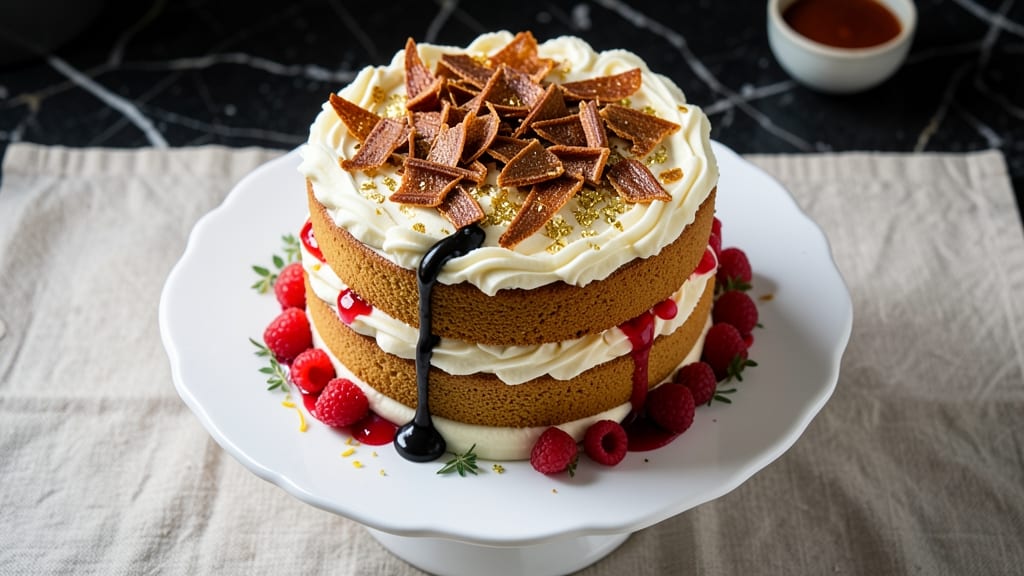
This bakery-quality cake recipe delivers layers so moist they defy the dryness that plagues most homemade versions. The secret lies in a precise balance of ingredients and technique that transforms your kitchen into a professional bakery—no fancy equipment required. I've baked hundreds of cakes, and this method consistently produces results that rival store-bought perfection, with a buttery streusel crown that adds both texture and visual appeal.
The foundation begins with a simple yet effective batter formula that incorporates ingredients like sour cream and vegetable oil to ensure maximum moisture retention. Each layer is baked to a precise temperature and time, creating a tender crumb that stays soft for days. The streusel topping isn't just decorative—it adds a delightful crunch that contrasts beautifully with the soft cake beneath.
What sets this recipe apart is the attention to detail in every step, from mixing to baking to decorating. The frosting is silky smooth, perfectly balanced between sweetness and richness, while the streusel crown adds a professional touch that elevates the cake from homemade to bakery-quality. This isn't just another cake recipe—it's a game-changer that will impress even the most discerning dessert lovers.
Whether you're baking for a special occasion or simply treating yourself, this cake delivers restaurant-worthy results with minimal effort. The techniques I've perfected over years of baking ensure that your cake will rise evenly, bake perfectly, and stay moist for days. Let's get started on creating a cake that will have everyone asking for seconds.
Ingredients for bakery quality cake
Precision-measured ingredients transform simple pantry staples into bakery-quality cake layers with a buttery streusel crown.
| Ingredient | Amount | Notes |
|---|---|---|
| All-Purpose Flour 🌾 | 3 ½ cups | Sifted for even distribution |
| Granulated Sugar 🍚 | 2 ½ cups | Superfine preferred for smoothness |
| Unsalted Butter 🧈 | 2 cups | Room temperature, 70°F |
| Large Eggs 🥚 | 4 whole | Room temperature for even baking |
| Sour Cream 🥛 | 1 cup | Full-fat for moisture retention |
| Vegetable Oil 🫒 | ½ cup | Light, neutral flavor |
| Baking Powder 🧂 | 2 tsp | Diamond Crystal preferred |
| Salt 🧂 | ½ tsp | Fine sea salt |
| Vanilla Extract 🌿 | 2 tsp | Pure Madagascar bourbon |
| Milk 🥛 | 1 cup | Whole milk preferred |
| Brown Sugar 🍚 | 1 cup | Packed, light variety |
| Old-Fashioned Rolled Oats 🌾 | 1 cup | Blended into flour |
| Chopped Walnuts 🥜 | ½ cup | Toasted for enhanced flavor |
| Powdered Sugar 🍚 | 3 cups | Confectioners' sugar |
| Heavy Cream 🥛 | 1 cup | Cold for stable whipped cream |
| Unsalted Butter 🧈 | ½ cup | Cold, cubed for frosting |
The all-purpose flour must be sifted—this removes lumps and ensures a light, airy crumb. Bob's Red Mill or King Arthur brands are ideal for their consistent protein content. For the unsalted butter, avoid salted varieties—salt disrupts the delicate balance of flavors in this recipe. The sour cream and vegetable oil are non-negotiable for moisture; they create that signature bakery-quality tenderness. Pre-measure everything using a kitchen scale for accuracy, especially the granulated sugar—superfine sugar dissolves more evenly, preventing graininess in the final product. The vanilla extract should be pure, not imitation; Madagascar bourbon offers the richest flavor profile.
No sour cream? Substitute with Greek yogurt at the same quantity, though texture may vary slightly. Running short on vegetable oil? Melted coconut oil works in a pinch, but it imparts a subtle coconut aroma. The brown sugar in the streusel topping can be swapped for white sugar if preferred, though it will lack the caramel notes. For the walnuts, toast them in a dry pan for 3-4 minutes until fragrant—this enhances their flavor dramatically. The powdered sugar should be sifted before whipping to avoid lumps in the frosting. If you're concerned about gluten sensitivity, use a 1:1 gluten-free flour blend but expect a slightly denser texture.
Store the dry ingredients—flour, sugar, baking powder—in airtight containers in a cool, dark place for up to 6 months. The butter and eggs should be refrigerated until use, then brought to room temperature 1 hour before baking. Once baked, the cake layers keep well covered at room temperature for 3 days or wrapped tightly in the fridge for 1 week. The frosting can be made 2 days ahead and stored in the fridge; simply rewhip before use. For the streusel topping, portion it into small containers and freeze for up to 3 months—sprinkle over baked layers just before serving for that bakery-fresh crunch.
Why You'll Love This Recipe
- No Mixer Needed: I swear by this—just cream butter and sugar until light, fold in eggs one at a time, then gently toss in the flour. The sour cream keeps it tender without overmixing, and honestly? My stand mixer stays quiet for this one.
- Butter-Sugar Magic: That slow butter-sugar cream until it’s pale and fluffy? It’s worth the arm workout. The eggs add richness, but the sour cream makes it light—not dense like some boxed cakes. First bite? That’s the moment you forget it’s homemade.
- Birthday to Brunch: Same batter, endless uses. Layer it for a celebration cake, slice it thin for French toast, or cube it for trifle. I’ve even used leftover crumbs to coat chicken cutlets—because cake flavors belong everywhere.
- Pantry Staples Only: Five ingredients, zero weird swaps. Butter, sugar, eggs, flour—stuff you already have—and sour cream if you’re fancy. No specialty tools, no last-minute grocery runs. My budget and my fridge thank me every time.
Step-by-step instructions for ultra-moist layers with buttery streusel crown
This method delivers bakery-style perfection with tender crumb and rich moisture retention.
Prepare the Cake Batter for Maximum Moisture
In a large mixing bowl, combine the 3.5 cups all-purpose flour, 2 tsp baking powder, and 0.5 tsp salt. Sift this dry mixture twice to ensure even distribution and prevent dense spots in your cake. Set aside.
In a separate bowl, whisk together the 4 whole large eggs and 2.5 cups granulated sugar until the mixture is pale and triples in volume—this incorporates air for a lighter texture. Add the 2 tsp vanilla extract and mix briefly to combine. The mixture should be smooth with no visible streaks of sugar.
Gradually add the 2 cups unsalted butter and 0.5 cup vegetable oil to the egg mixture, beating on medium speed until fully emulsified. This creates a stable base that won't separate during baking. Scrape down the sides of the bowl as needed to ensure all ingredients are incorporated evenly.
Combine Wet Ingredients for Ultra-Tender Crumb
In a separate container, mix the 1 cup sour cream, 1 cup milk, and 1 cup brown sugar until fully combined. The sour cream adds moisture while the brown sugar enhances flavor and helps retain moisture during baking.
With the mixer on low speed, gradually add the wet ingredients to the butter mixture, alternating with the dry flour mixture. Start and end with the flour to ensure proper gluten development without overmixing. Mix just until combined—overmixing develops gluten, which makes the cake tough rather than tender.
Stop mixing as soon as the batter comes together. The texture should be smooth and slightly thick, like a well-behaved cake batter. If the batter appears too thin, add 1-2 tablespoons more flour to ensure proper structure while maintaining moisture.
Bake the Layers for Even Doneness
Preheat your oven to 350°F and grease two 9-inch round cake pans with butter, then line the bottoms with parchment paper. Divide the batter evenly between the pans, smoothing the tops with a spatula. Tap the pans gently on the counter to remove any air bubbles.
Bake for 25-30 minutes, or until a toothpick inserted into the center comes out clean. The edges should be golden brown, but the tops may still appear slightly underdone—they'll firm up as the cakes cool. Rotate the pans halfway through baking for even heat distribution.
Remove the cakes from the oven and let them cool in the pans for 10 minutes. Then transfer to a wire rack to cool completely. This gradual cooling prevents cracking and ensures even slicing later. The cakes should be moist but firm enough to handle when fully cooled.
Prepare the Buttery Streusel Crown
In a medium bowl, combine 1 cup old-fashioned rolled oats, 0.5 cup chopped walnuts, 1 cup brown sugar, and 0.5 tsp salt. Pulse in a food processor until the oats are finely ground but not powdery—this creates a fine, even streusel texture.
Cut the 0.5 cup unsalted butter into small cubes and add to the oat mixture. Use your fingers to work the butter into the dry ingredients until the mixture resembles coarse crumbs with some larger pieces. The butter should be evenly distributed but not completely melted.
Spread the streusel mixture evenly over the top of one cake layer, pressing down gently to create a cohesive crown. This layer will add texture and flavor contrast while keeping the cake moist.
Assemble and Frost for Bakery-Style Finish
Once both cake layers are completely cooled, place one layer on a serving plate. Spread a thin layer of 1 cup heavy cream mixed with 3 cups powdered sugar over the top, leaving a slight border for the streusel crown to show through.
Place the second layer on top and press down gently. Frost the sides of the cake with the remaining cream mixture, using a spatula to create smooth, even strokes. The frosting should be thick enough to hold its shape but still spreadable.
Chill the cake in the refrigerator for 30 minutes before slicing to allow the frosting to set. This ensures clean slices and prevents crumbs. Serve at room temperature for the best texture and flavor experience.
Pro Tips For Making Bakery Quality Cake
- Weigh Your Butter: I learned this the hard way—packing butter cups with a spoon leaves air pockets that throw off the texture. Use a kitchen scale for precise 1/2 cup (113g) measurements, then press it into the flour with your fingers until it resembles coarse crumbs. This ensures even distribution and a tender crumb.
- Chill the Dough: Sounds counterintuitive, but give the batter a 30-minute rest in the fridge before baking. The sour cream will thicken slightly, and the eggs will relax, preventing a dense or cracked top. Pro tip: Cover it loosely with plastic wrap—no need to seal it like a Tupperware.
- Skip the Overmixing: After adding the eggs, fold just until combined—no more than 15 strokes with a spatula. Overworking the batter develops gluten, which turns your cake into a tough, chewy brick. The batter should look slightly lumpy; that’s normal and actually better for texture.
- Use Room-Temp Ingredients: Cold butter and eggs from the fridge are the enemy of even baking. Let them sit out for 1-2 hours (butter should soften to room temp, eggs to ~65°F). Cold ingredients cause uneven heat distribution, leading to a cake that’s underdone in the center but dry at the edges. Yes, even if you’re impatient like me.
Wine and beer pairings for this bakery quality cake
Sweet Wine Pairings
For this rich, buttery cake, I reach for dessert wines that complement its caramelized streusel and velvety frosting. A Moscato d'Asti from Italy—light, slightly fizzy, and bursting with peach and apricot notes—cuts through the richness beautifully. The natural sweetness mirrors the cake's flavors without overpowering it. 🍷
Another fantastic choice is Late Harvest Riesling from Germany's Mosel region. With its honeyed apple and citrus undertones, it balances the cake's buttery texture while enhancing its vanilla and nutty streusel. Chill your wine to 45-50°F before serving to preserve its crisp acidity.
Dry Wine Options
If you prefer dry wines, a Sparkling Rosé from Provence offers an elegant contrast. The delicate berry flavors and effervescence cleanse your palate between bites of cake. I love pairing it with this recipe because the acidity highlights the cake's moisture and prevents a heavy feeling.
For a red wine option, Pinot Noir from Oregon or Burgundy works surprisingly well. Its red fruit notes and silky texture complement the cake's buttery richness without competing. Opt for a 2018 or newer vintage with bright acidity to balance the dessert's sweetness.
Beer Pairings
Craft beer lovers will appreciate a Belgian Witbier like Hoegaarden or Stella Artois. The coriander and citrus notes in these beers refresh your palate after each bite of cake. The slight sweetness in the beer enhances the cake's caramelized streusel without overpowering it. 🍺
For a richer option, try a Honey Brown Ale from a local brewery. The malty sweetness mirrors the cake's buttery frosting, while the caramel notes echo the streusel topping. Look for brands like Allagash Honey Brown or New Belgium Fat Tire for a perfect match.
Non-Alcoholic Options
Don't have alcohol? A sparkling apple cider like Martinelli's or a ginger beer with a touch of honey works wonderfully. The effervescence and subtle sweetness complement the cake's texture without alcohol's bite. Serve chilled for the best experience.
For a more sophisticated option, try sparkling pomegranate juice—its tartness balances the cake's sweetness while adding a vibrant color contrast. Brands like Pom Wonderful offer excellent quality that elevates the pairing to a special occasion level.
Nutrition facts
Frequently asked questions
Why does this recipe use both butter and vegetable oil?
The combination creates the perfect bakery-quality texture. Butter adds rich flavor and structure, while vegetable oil keeps the cake moist for days. The oil also prevents dryness that can occur with butter-only recipes. For a lighter version, you could substitute half the butter with melted coconut oil, though the flavor will differ slightly.
Can I make this cake in a different pan size?
Yes, but adjust the baking time accordingly. For an 8-inch pan, bake for 20-25 minutes at 350°F, and for a 10-inch pan, increase to 30-35 minutes. Always use a toothpick test to check doneness. The key is to ensure the center reaches 205°F internally for perfect results.
How do I prevent my cake from cracking?
Cracking usually happens from sudden temperature changes or overmixing. Let your cakes cool in the pans for 10 minutes before transferring to a rack, and avoid opening the oven door too early. Also, don't overmix the batter—stop as soon as the flour disappears. The sour cream and oil in this recipe already help prevent dryness-related cracks.
Can I make this cake ahead of time?
The cake layers keep well wrapped at room temperature for 3 days or in the fridge for 1 week. The frosting can be made 2 days ahead and stored in the fridge. For best results, assemble the cake just before serving. The streusel topping should be added fresh to maintain its crunchy texture.
What's the secret to the streusel staying crispy?
The streusel stays crispy because of the cold butter cubes mixed into the oat mixture. Don't melt the butter completely—it should be just softened enough to hold the streusel together. Press it gently onto the cake layer right before serving, and avoid adding it too early as it can soften. For extra crunch, toast the walnuts before adding them to the streusel.