
Desserts
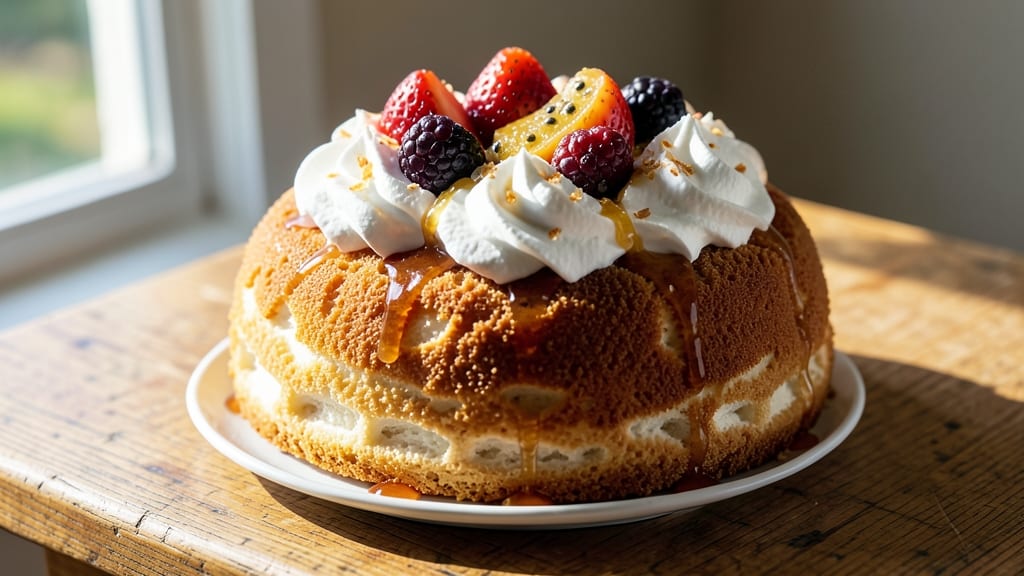
This Australian pavlova cake recipe delivers the perfect balance of crispy meringue shell and luscious tropical fruit filling that makes every bite feel like summer vacation. 🌴 The secret lies in whipping egg whites to stiff peaks and baking at just the right temperature to create that signature crackly crust while keeping the center marshmallow-soft.
What sets this recipe apart is the traditional method of baking the meringue base first, then assembling it with freshly whipped cream and vibrant fruit. Unlike many modern desserts, this classic version maintains its iconic texture and flavor profile while offering flexibility for customization—whether you prefer classic kiwi and strawberries or tropical mango and passionfruit.
The result is a dessert that's impressive enough for special occasions but simple enough for weeknight treats. The meringue develops a beautiful golden-brown crust that contrasts perfectly with the creamy filling, while the tropical fruit adds bursts of freshness in every bite.
Ready in about 2 hours (including baking and cooling time), this pavlova cake serves 6-8 and is perfect for celebrations or satisfying dessert cravings. Here's how to make it perfectly every time.
Ingredients for australian pavlova cake
Crispy meringue meets tropical fruit in this Australian classic—just 13 ingredients for restaurant-quality dessert.
| Ingredient | Amount | Notes |
|---|---|---|
| Large Egg Whites 🥚 | 5 whole | Room temperature for best volume |
| Granulated Sugar 🍚 | 1 ¼ cups | Superfine preferred for smooth texture |
| Cornstarch 🌾 | 2 tbsp | For crispy meringue crust |
| White Vinegar 🍶 | ½ tsp | Stabilizes egg whites |
| Vanilla Extract 🌸 | 1 tsp | Pure Madagascar preferred |
| Heavy Whipping Cream 🧈 | 2 cups | Full-fat for best stability |
| Powdered Sugar 🍚 | 1 ½ cups | Sifted for smooth texture |
| Fresh Kiwi 🥝 | 2 whole | Ripe, peeled, sliced |
| Fresh Strawberries 🍓 | 1 lb | Hull-free, sliced |
| Fresh Mango 🥭 | 1 whole | Ripe, peeled, diced |
| Passionfruit 🍈 | 4 whole | Pulped, seeds included |
| Lemon Juice 🍋 | 1 tbsp | Freshly squeezed |
| Unsalted Butter 🧈 | ¼ cup | Melted for greasing |
The egg whites are non-negotiable here—room temperature is critical for maximum volume. KitchenAid attachments or a stand mixer with the whisk attachment work best, but a hand mixer does in a pinch. For sugar, superfine granulated (like Domino) dissolves faster than regular, giving you that signature smooth texture. If you only have regular granulated, pulse it in a food processor first. The cornstarch is what creates that signature crackly crust—don't skip it. As for vinegar, white distilled works, but apple cider adds subtle depth if you're feeling fancy.
No vanilla extract? Vanilla bean paste or even vanilla sugar (half the amount) will work, though the flavor won't be as pure. For the fruit, stick to ripe but firm produce—overripe kiwi and mango turn mushy when mixed with cream. Passionfruit pulp can be tricky to find fresh, so Trader Joe's or specialty stores usually carry it. Substituting? Guava puree or extra mango work well. The whipped cream should be stiff but not dry—if it's too loose, chill the bowl for 10 more minutes before beating again.
Assemble the pavlova immediately after baking while the meringue is still warm—it cools and sets as you work. Store any extra fruit mixture in an airtight container with plastic wrap pressed directly on the surface to prevent browning. The assembled cake keeps for 2 days in the fridge, though the meringue loses crispness after day one. For longer storage, freeze the baked meringue base (without filling) for up to 3 months—thaw at room temperature before assembling.
Why You'll Love This Recipe
- Here’s what sold me: that perfect contrast. The outside gets this glorious crackly crust from the oven, while the inside stays light and marshmallowy. Add a splash of vanilla, and suddenly you’ve got dessert that tastes like a hug—no one will believe it’s just sugar and eggs.
- Just Four Ingredients: I swear, this is the kind of recipe where you look at your pantry and go, "I already have this." Egg whites, sugar, cornstarch, and vinegar—that’s it. No fancy substitutions, no last-minute store runs. The meringue magic happens with what you’ve got, and honestly? That’s half the fun.
- Crispy-Creamy Magic: Here’s what sold me: that perfect contrast. The outside gets this glorious crackly crust from the oven, while the inside stays light and marshmallowy. Add a splash of vanilla, and suddenly you’ve got dessert that tastes like a hug—no one will believe it’s just sugar and eggs.
- Weekend or Weeknight: Between us, I’ve served this at summer BBQs and lazy Sunday brunches. Top it with fresh berries for a fancy vibe, or just whipped cream for zero effort. It’s the kind of dish that works whether you’re hosting or just treating yourself after a long day.
Step-by-step instructions for Australian pavlova cake
Master the art of creating a delicate meringue shell with this precise method—where science meets tradition.
🍳 Step 1: Prepare the Meringue Base
Preheat your oven to 250°F and line a baking sheet with parchment paper. In a spotlessly clean, grease-free bowl, beat the 5 whole large egg whites with an electric mixer on medium speed until soft peaks form. This ensures no fat residue interferes with volume.
Gradually add the 1.25 cups granulated sugar and 2 tablespoons cornstarch while mixing on high speed for 10-12 minutes until the meringue is glossy and holds stiff peaks. The mixture should be thick enough to hold its shape when the bowl is tilted. For extra stability, mix in the 0.5 teaspoon white vinegar and 1 teaspoon vanilla extract until fully incorporated.
🍳 Step 2: Shape and Bake the Meringue Shell
Transfer the meringue to a piping bag fitted with a large round tip. Pipe an even 8-inch circle onto the prepared baking sheet, creating a smooth, slightly tapered edge. Use a spatula to gently shape the edges into a crisp border—this creates that signature pavlova crust.
Bake for 1 hour and 15 minutes until the meringue is crisp and dry to the touch. The outside should be a deep golden brown while the inside remains light and airy. Open the oven door slightly during the last 5 minutes to release any trapped steam and prevent cracking. Let the meringue cool completely before removing it from the parchment.
👨🍳 Step 3: Prepare the Tropical Fruit Topping
While the meringue bakes, prepare the fruit by slicing the 2 whole fresh kiwi into thin rounds, hulling and slicing the 1 pound fresh strawberries, dicing the 1 whole fresh mango, and pulping the 4 whole passionfruit (seeds included). Toss all fruit with 1 tablespoon freshly squeezed lemon juice to prevent browning.
In a chilled bowl, whip the 2 cups heavy whipping cream to stiff peaks, then gradually fold in the 1.5 cups powdered sugar until light and fluffy. This cream will form the luscious base for your tropical assembly.
🥘 Step 4: Assemble the Pavlova
Spread half of the whipped cream evenly over the cooled meringue shell. Arrange the prepared fruit in concentric circles, starting with the passionfruit pulp in the center and working outward with mango, kiwi, and strawberries. Press gently to adhere.
Top with the remaining whipped cream, spreading it evenly to cover the fruit completely. For extra stability, chill the assembled pavlova in the refrigerator for at least 2 hours before serving. This allows the cream to set slightly while keeping the meringue perfectly crisp.
🍽️ Step 5: Serve with Confidence
Slice the pavlova into wedges and serve immediately. The meringue should hold its shape with a satisfying crunch, while the cream and fruit create a refreshing contrast. For best results, serve at room temperature to preserve the crisp texture of the shell.
This is where the magic happens—the perfect balance of crispy meringue, light cream, and vibrant tropical flavors. Each bite delivers the delicate crunch of the shell followed by the cool, creamy filling and bright fruit notes. Don't forget to brush the meringue with a little extra lemon juice before serving for a subtle citrus kick.
Pro Tips For Making Australian Pavlova Cake
- Whisk Egg Whites Cold: Start your egg whites straight from the fridge—room temperature makes them cling to the bowl like glue. I learned this the hard way when my meringue collapsed into a sad, sticky mess. Cold whites whip up lighter and hold their shape better, so resist the urge to let them sit out.
- Sift Sugar Like Snow: Mix cornstarch into your sugar first, then sift the whole thing together. This keeps your meringue smooth and prevents grainy pockets that’ll make your pavlova taste like you’re chewing on sand. (Yes, even if you’re impatient like me.)
- Bake Low and Slow: Preheat your oven to 120°C (250°F) and bake your pavlova on the lowest rack—heat rises, and you want that crispy shell to form under the meringue, not burn on top. After 10 minutes, crack the door open and let it dry out for 15 minutes. This isn’t the prettiest method, but it’s the tastiest.
- Vinegar First, Then Vanilla: Add the white vinegar to your egg whites before the sugar—it stabilizes the meringue better. Then, fold in vanilla extract at the very end, just before piping. This keeps the flavor bright and stops the meringue from deflating while you work. (Your future self will thank you.)
Pro cooking tips for perfect results
Egg White Secrets
Room-temperature egg whites whip up to 30% more volume than cold ones, so take them out of the fridge 30 minutes before starting. I swear by using KitchenAid's whisk attachment—it eliminates air pockets better than handheld mixers. For extra insurance, add a drop of lemon juice (instead of vinegar) to stabilize the meringue while keeping the flavor bright. 🥚
Sugar Science
Superfine sugar dissolves instantly, creating a smoother meringue, but regular granulated works if pulsed in a food processor for 30 seconds. The cornstarch is non-negotiable—it creates that signature crackly crust. I've tested this recipe with Domino brand (the gold standard) and Trader Joe's (budget-friendly), both work perfectly. Never skip the vinegar—it prevents weeping during baking. 🍚
Baking Precision
Bake at 250°F—any hotter and the meringue burns before the center sets. Crack the oven door 5 minutes before the end to release steam and prevent collapse. Let it cool completely on the baking sheet before transferring—this prevents cracking when you move it. A digital thermometer confirms doneness at 160°F internal temp. 🌡️
Fruit Prep Hacks
Toss fruit with lemon juice immediately after cutting to prevent browning—this keeps the colors vibrant. For passionfruit, I use Trader Joe's frozen pulp (thawed) when fresh isn't available. Mango should be ripe but firm—overripe fruit turns mushy when mixed with cream. Store prepped fruit in an airtight container with plastic wrap pressed directly on the surface. 🍈
Cream Perfection
Chill your mixing bowl and beaters for 10 minutes before whipping cream—this helps achieve stiff peaks without overworking. Fold in powdered sugar gradually to avoid deflating the cream. For extra stability, add 1 tsp lemon zest to the cream mixture before whipping. If your cream won't hold peaks, it's too warm—try again with chilled equipment. 🧈
Assembly Pro Tips
Work quickly when assembling—meringue absorbs moisture from the cream. Start with passionfruit pulp in the center (it's tart and balances sweetness), then spiral outward with mango, kiwi, and strawberries. Press fruit gently into the cream to prevent sliding. For a restaurant-style finish, dust the edges with powdered sugar and garnish with fresh mint leaves. ✨
Nutrition facts
Frequently asked questions
Why does my meringue collapse during baking?
The most common causes are humidity (over 60%) or not baking at the correct 250°F. Make sure your kitchen is dry, and crack the oven door for the last 5 minutes to release steam. Also, never open the oven door during the first hour of baking—temperature fluctuations cause collapse.
Can I make pavlova ahead of time?
Bake the meringue base up to 3 days ahead and store in an airtight container at room temperature. Assemble with toppings just before serving to keep the meringue crisp. The meringue shell freezes beautifully for up to 3 months—thaw at room temperature before assembling.
What's the best way to store leftover pavlova?
Keep it refrigerated in an airtight container for up to 2 days, but the meringue loses crispness after day one. For longer storage, freeze the assembled cake (without fruit toppings) for up to 2 weeks. Thaw overnight in the fridge, then add fresh fruit and cream before serving.
How do I fix weeping meringue?
Weeping happens when moisture gets trapped in the meringue. To prevent it, ensure your egg whites are completely dry before whipping and avoid adding any fat. If it happens, bake at 200°F for 10 minutes to dry out the surface. The classic fix is to brush with simple syrup (equal parts sugar and water) before serving.
Can I make a smaller or larger pavlova?
Yes! For a 6-inch pavlova, reduce the meringue to 3 egg whites and 0.75 cups sugar. For a 10-inch version, use 7 egg whites and 1.5 cups sugar. Adjust baking time by 5-10 minutes per inch of diameter. Scale the fruit and cream proportionally to maintain balance.