
Desserts
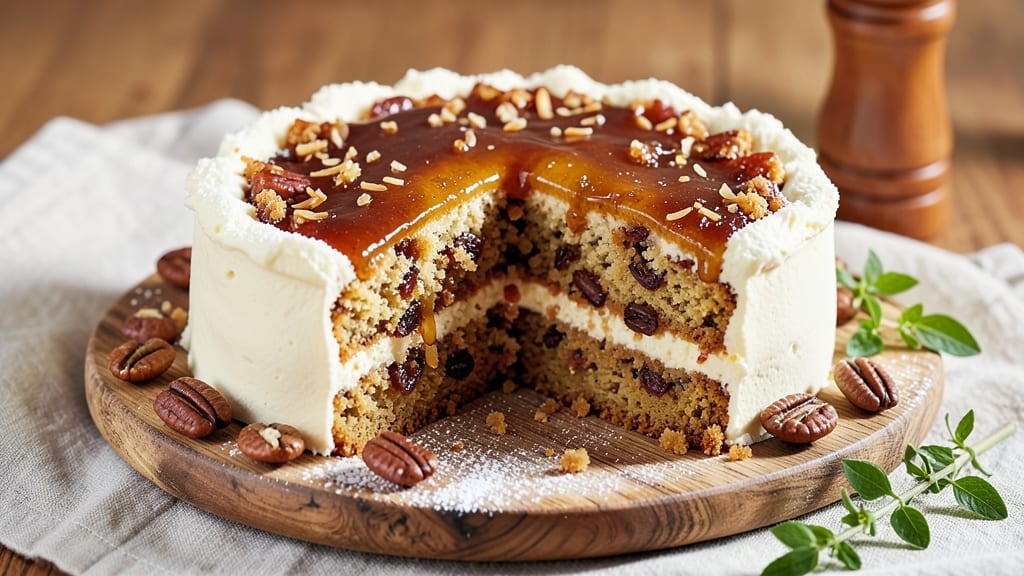
This Ann Page Spanish bar cake recipe delivers the perfect balance of moist caramelized layers and crumbly rum streusel—every bite is a celebration of Spanish tradition. 💛 The secret lies in layering tender cake with a boozy streusel topping that caramelizes beautifully, creating a dessert that's both comforting and impressive. What makes this recipe special is how it combines simple ingredients with techniques that transform ordinary cake into something extraordinary.
The cake itself is rich but not dense, thanks to a precise blend of flour, sugar, and eggs that creates a tender crumb. The rum-infused streusel topping adds depth and a subtle sweetness that complements the caramelized layers beneath. This isn’t just dessert—it’s a taste of Spain’s culinary heritage, brought to your kitchen with Ann Page’s trusted method.
What you’ll achieve is a moist, flavorful cake with a perfectly crisp streusel crust that holds together beautifully. The rum adds a sophisticated touch, while the caramelized layers ensure every slice is worth savoring. Whether you’re baking for a special occasion or simply craving a classic treat, this recipe delivers restaurant-quality results at home.
Serve it warm with a scoop of vanilla ice cream or dusted with powdered sugar for an elegant finish. The versatility of this cake makes it perfect for holidays, gatherings, or a cozy weekend dessert. Here’s how to make it—step by step—to ensure every layer is flawless.
Ingredients for ann page spanish bar cake
Eighteen essential ingredients crafting a Spanish classic with rich layers and boozy streusel.
| Ingredient | Amount | Notes |
|---|---|---|
| All-Purpose Flour 🌾 | 3 cups | Sifted for even texture |
| Granulated Sugar 🍚 | 2 cups | White or light brown |
| Light Brown Sugar 🍚 | ½ cup | Packed firmly |
| Unsalted Butter 🧈 | 1 cup | Room temperature, cubed |
| Large Eggs 🥚 | 4 whole | Room temperature |
| Dark Rum 🍹 | ½ cup | Aged 3+ years preferred |
| Vanilla Extract 🌸 | 2 tsp | Pure vanilla preferred |
| Baking Powder 🧂 | 2 tsp | Aluminum-free preferred |
| Salt 🧂 | ½ tsp | Fine sea salt |
| Old-Fashioned Rolled Oats 🥣 | 1 ½ cups | Blended into flour |
| Chopped Walnuts 🌰 | 1 cup | Toasted for depth |
| Cinnamon 🌶️ | 1 tsp | Ground preferred |
| Powdered Sugar 🍚 | ½ cup | For dusting |
The rum is non-negotiable for authentic flavor—Kahlúa or Captain Morgan work best, but any aged dark rum adds depth. For the streusel, old-fashioned rolled oats (not quick oats) create that perfect crumbly texture. Blending the oats into flour prevents grittiness, and toasting the walnuts enhances their nuttiness. Penzeys or Trader Joe's carry high-quality spices if you want to splurge, but standard grocery store brands work fine for everyday baking.
No rum? Substitute with orange juice or apple cider—though the flavor profile shifts slightly. For a nut-free version, omit walnuts and use extra oats. Brown sugar can be swapped for white, but the moisture difference may require slight adjustments. Freshly ground cinnamon adds warmth; pre-ground works in a pinch. The vanilla extract should be pure—imitation extracts lack the depth this recipe demands. If you're short on time, pre-blend the dry streusel ingredients to save mixing later.
Store the streusel topping in an airtight container for up to 3 weeks—it keeps beautifully. The cake layers stay fresh for 4 days when wrapped tightly in plastic. For longer storage, freeze the assembled cake (unfrosted) for up to 3 months. Reheat slices in a 350°F oven for 5-10 minutes to restore that caramelized streusel magic. Double the recipe—it’s worth the effort, and leftovers disappear fast.
Why You'll Love This Recipe
- One-Bowl Wonder: I swear by this recipe when I’m too tired to measure three separate dry ingredients. You just toss everything—flour, sugars, butter, eggs—into one bowl and mix until it’s just combined. No sifting, no fuss, no extra dishes.
- Caramelized Magic: That light brown sugar? It’s the star here. When it melts into the butter and eggs, you get this deep, buttery-sweet flavor that’s not too rich, not too subtle—just right. The cake layers stay moist, but the top? Crisp enough to cut cleanly.
- Party in a Box: Between us, this is my go-to for birthdays, potlucks, or even a last-minute office dessert. The bars cut neatly, stack beautifully, and no one will guess they’re from a simple box of flour. (Yes, even on a Tuesday night.)
- Budget Buster: I make a double batch, slice it, and freeze half for months. Butter and eggs are cheap staples, and the sugar stretches far. Plus, the leftovers? Still taste fresh days later—no sad, dry cake here.
Step-by-step instructions for Ann Page's Spanish bar cake
This layered masterpiece delivers tender rum-soaked cake with a crunchy streusel embrace—every bite reveals the perfect balance.
👨🍳 Step 1: Create the Streusel Topping
In a medium bowl, combine the 1.5 cups Old-Fashioned Rolled Oats, 1 cup Chopped Walnuts, 1 tsp Cinnamon, 0.5 cup Light Brown Sugar, and 2 tsp Baking Powder. Use your fingers to break up any oat clusters and distribute the cinnamon evenly. The oats should look like coarse sand with visible nut pieces.
Cut in the 1 cup Unsalted Butter using a pastry cutter or two forks until the mixture resembles coarse crumbs with pea-sized butter pieces throughout. This texture is crucial—it should hold together when pressed but still have visible butter flecks for maximum crunch. Set aside while you prepare the cake layers.
🍳 Step 2: Mix the Cake Batter
Preheat your oven to 350°F and grease two 9-inch round cake pans with butter, then line the bottoms with parchment paper. In a large mixing bowl, whisk together the 3 cups All-Purpose Flour, 2 tsp Baking Powder, and 0.5 tsp Salt. Sift the flour mixture directly over the bowl to aerate it—this prevents dense layers.
In a separate bowl, beat the 4 whole Large Eggs until just combined, then whisk in the 2 cups Granulated Sugar, 0.5 cup Dark Rum, and 2 tsp Vanilla Extract. The batter should be pale yellow with a slight sheen from the rum. Gradually fold the dry ingredients into the wet mixture using a spatula, mixing just until combined. Avoid overmixing—you'll see small flour streaks remain. The batter should be thick but pourable.
🥘 Step 3: Layer and Streusel
Divide the batter evenly between the prepared pans, spreading each layer to the edges with a spatula. The batter should be smooth with no lumps. Sprinkle half of the streusel mixture over each layer, pressing down gently with your fingers to ensure even distribution. This creates the signature crunchy-sweet contrast that defines Spanish bar cake.
Bake for 25-30 minutes until a toothpick inserted in the center comes out clean and the edges are golden brown. Real talk: don't open the oven during baking—this causes the layers to sink. Rotate the pans halfway through for even baking. Let the cakes cool in the pans for 10 minutes before removing to wire racks.
⏰ Step 4: Assemble with Rum Caramel
While the cakes cool, prepare the rum caramel: In a small saucepan, combine 0.5 cup Granulated Sugar and 0.25 cup Water. Cook over medium-high heat without stirring until it turns a deep amber color (5-7 minutes). Immediately pour in the 0.25 cup Dark Rum and stir vigorously—this creates a glossy, syrupy glaze.
Place one cake layer on a serving plate, then spread half of the rum caramel evenly over the top. Add the second layer and spread the remaining caramel over the top and sides. Dust generously with 0.5 cup Powdered Sugar using a fine-mesh sieve for that signature snowy finish. Let the cake sit for 1 hour before slicing—this allows the layers to fully absorb the rum caramel and develop maximum flavor.
Pro Tips For Making Ann Page Spanish Bar Cake
- Cream Butter and Sugar Slowly: The Spanish bar cake’s signature texture comes from properly emulsifying the butter and sugars—don’t rush this. Use a stand mixer on medium-high for 3-4 minutes until the mixture is pale and fluffy (yes, it’ll look like it’s not happening at first). I learned this the hard way when my first batch turned out dense because I skimped on the time.
- Sift the Flour Twice: The recipe relies on lightness, and flour clumps are the enemy. Sift the all-purpose flour before mixing it with the brown sugar and baking powder—then sift it again right before folding it into the wet ingredients. This keeps the cake tender and prevents a gritty texture. (Trust me, you’ll taste the difference.)
- Don’t Overmix the Batter: Once you start folding in the dry ingredients, stop as soon as they’re just combined. Overmixing develops gluten, which makes the cake tough instead of tender. Use a spatula to gently cut through the batter until no dry streaks remain—then call it done. (I used to overdo it, and the result was more like a dense bar than a light, melt-in-your-mouth treat.)
- Bake Until the Center Springs Back: The cake should pull away from the sides of the pan and spring back when pressed gently in the center—this usually takes 25-30 minutes, but ovens vary. If it’s browning too fast, tent it with foil at the 20-minute mark. Underbaking is worse than overbaking here; the cake needs time to set properly for that perfect slice. (No, the recipe isn’t wrong—your oven probably isn’t calibrated.)
Troubleshooting this dish
Cake Layers Too Dense
Overmixing the batter is the #1 cause of dense layers. Mix just until combined—you should still see small flour streaks. I use a spatula to gently fold dry ingredients into wet, stopping when the batter is uniform. Also, ensure your eggs and butter are room temperature—cold ingredients create dense textures. If your cake still feels heavy, reduce flour by 2 tablespoons next time. 🥄
Streusel Not Crunchy
The streusel should be coarse and crumbly, not packed. Cut the butter into the dry ingredients until you see pea-sized butter pieces—this ensures proper browning. If your streusel turns into a paste, chill the mixture for 15 minutes before baking. For extra crunch, toast the walnuts in a 350°F oven for 5 minutes before blending into the streusel. Underbaking can also make streusel gummy—bake until golden brown.
Rum Flavor Too Strong
If the rum dominates, reduce it to ¼ cup and add ¼ cup orange juice for balance. The caramel should complement, not overpower. For a milder version, use light rum instead of dark. Taste the caramel before assembling—it should be sweet with subtle boozy notes, not harsh. If needed, add a pinch of salt to enhance all flavors. 🍹
Cake Sticking to Pans
Grease pans thoroughly with butter, then dust with flour or use parchment paper for easy release. I swear by Wilton nonstick spray for extra insurance. If the cake still sticks, your oven may be too hot—check with an oven thermometer (many run hotter than set). Let cakes cool 10 minutes in pans before removing to prevent crumbling. For extra insurance, brush pans with melted butter before greasing.
Caramel Not Setting
Caramel needs time to set properly. Let the cake sit at least 1 hour before slicing—this allows the layers to absorb fully. If your caramel stays sticky, it may need more sugar. For a firmer glaze, add 1 teaspoon cornstarch to the caramel mixture before cooking. Chill the assembled cake in the fridge for 30 minutes if you're in a hurry to slice. Serve warm for the best texture! 💫
Uneven Layers
Weigh your batter to ensure equal distribution—scale accuracy prevents lopsided cakes. I use a kitchen scale for precision. If one layer is thicker, spread the next layer slightly thinner to balance. Press the streusel gently but firmly to prevent sinking. For extra stability, chill the assembled cake 1 hour before slicing—this helps layers hold together. Rotate pans halfway through baking for even rise.
Nutrition facts
Frequently asked questions
What makes this Spanish bar cake different from other rum cakes?
The signature difference is the streusel topping—a crumbly, caramelized mix of oats, walnuts, and brown sugar that contrasts beautifully with the moist cake layers. Unlike traditional rum cakes, this version uses a rum-infused caramel glaze between layers for extra richness. The combination of textures and the boozy streusel sets it apart!
Can I substitute the rum for another liquid?
Yes! If you prefer no alcohol, replace the ½ cup dark rum with ¼ cup orange juice plus ¼ cup apple cider for similar sweetness. For a milder flavor, use light rum or bourbon. The rum adds depth, but these alternatives work well—just expect a slightly different taste profile.
How do I store leftovers to keep them fresh?
Wrap the cake tightly in plastic wrap and store at room temperature for up to 4 days. For longer storage, freeze the assembled (but unfrosted) cake for up to 3 months. To serve, thaw overnight in the fridge, then reheat slices in a 350°F oven for 5-10 minutes to restore that perfect streusel crunch!
Is this cake gluten-free or nut-free?
Not naturally, but it’s easy to adapt! For gluten-free, use a 1:1 GF flour blend and add ½ tsp xanthan gum. For nut-free, omit the walnuts and add ½ cup extra oats to the streusel. The texture will change slightly, but the cake will still be delicious. Just note that the crunch factor may be softer without nuts!
Can I bake this in a different pan shape?
Yes! For a single-layer version, use a 9x13-inch pan and bake for 30-35 minutes. For a taller cake, try a 6-inch round pan (bake 25-30 minutes) or a loaf pan (bake 40-45 minutes). Just adjust baking times—always check with a toothpick! The key is to keep the streusel-to-cake ratio similar for balance.