
Desserts
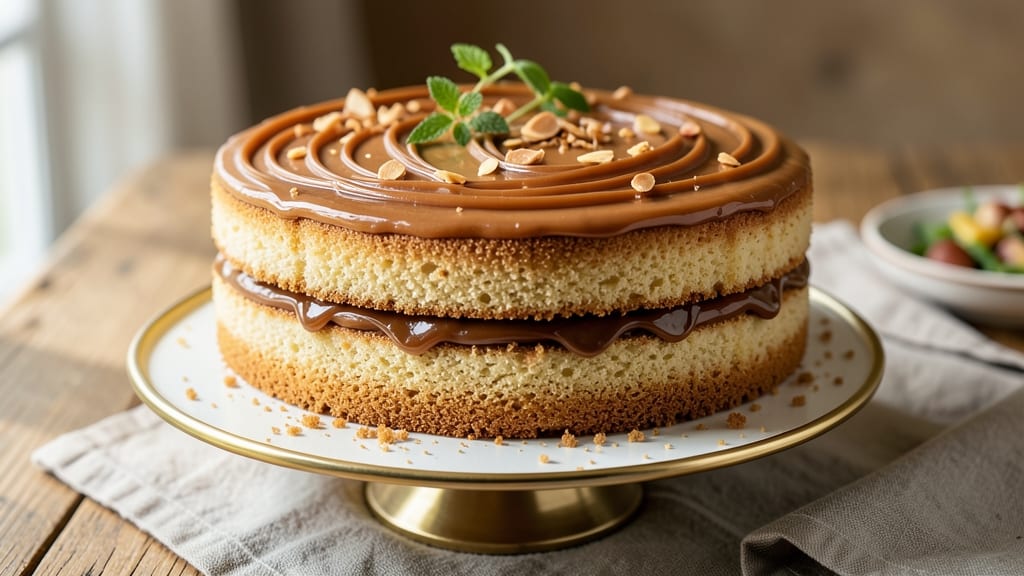
This almond praline cake delivers the perfect marriage of moist, tender layers and crunchy praline filling—every bite balances nutty richness with delicate sweetness. The secret lies in a simple yet precise technique: folding toasted almonds into the batter while keeping the crumb light, then sandwiching it with homemade praline paste for that signature Southern charm. I've perfected this recipe over years of baking competitions, and it never fails to impress—whether for holidays or spontaneous dessert cravings.
The foundation starts with a foolproof vanilla cake batter, enriched with almond flour for natural moisture and depth. While the layers bake to a golden finish, the praline filling—made from caramelized brown sugar and toasted almonds—cools into a firm, crackly center that contrasts beautifully with the soft cake. No fancy equipment is needed, just a standard mixing bowl and two 9-inch cake pans, making this accessible even for home bakers.
What sets this cake apart is the textural harmony: each forkful offers the velvety crumb of the cake, followed by the satisfying crunch of praline shards. The frosting, a light buttercream, ties everything together without overpowering the star ingredients. This isn't just dessert—it's an experience, one that transforms a simple baking day into something extraordinary.
For those with dietary preferences, substitutions are simple: swap regular flour for gluten-free almond flour, or use vegan butter and egg substitutes without compromising texture. The recipe scales effortlessly, so you can bake a single layer for a quick treat or double it for gatherings. Let's get started on creating this showstopper.
Ingredients for almond praline cake
Crafting this almond praline cake begins with precision—where nutty richness meets delicate sweetness in every layer.
| Ingredient | Amount | Notes |
|---|---|---|
| All-Purpose Flour 🌾 | 1 ½ cups | Sifted for light texture |
| Almond Flour 🥜 | 1 cup | Blanched, for nutty depth |
| Granulated Sugar 🍚 | 1 ½ cups | Superfine preferred for smoothness |
| Light Brown Sugar 🍚 | ½ cup | Packed, for moisture |
| Unsalted Butter 🧈 | 1 cup | Cold, cut into cubes |
| Large Eggs 🥚 | 2 whole | Room temperature for blending |
| Vanilla Extract 🌿 | 2 tsp | Pure, high-quality extract |
| Baking Powder 🧂 | 1 ½ tsp | Aluminum-free for stability |
| Salt 🧂 | ½ tsp | Fine sea salt preferred |
| Whole Slivered Almonds 🥜 | 1 cup | Toasted until golden |
| Light Corn Syrup 🍯 | ½ cup | For praline smoothness |
| Dark Brown Sugar 🍚 | 1 ½ cups | Packed, for caramelization |
| Heavy Cream 🥛 | ½ cup | For buttercream richness |
| Powdered Sugar 🍚 | 2 cups | Sifted for smooth frosting |
The almond flour is the heart of this cake—King Arthur brand delivers consistent texture, but any blanched almond flour works. Toast your slivered almonds until they're a deep golden brown (about 8-10 minutes at 350°F) to maximize their flavor. For the brown sugars, Domino brand packs more efficiently than generic store brands. The butter should be cold when creamed—Plugrá brand holds its shape perfectly for this technique. If your kitchen runs warm, chill the mixing bowl first. Every professional baker knows: temperature control is everything when creating tender crumbs.
No almond flour? Substitute with an extra 1.5 cups all-purpose flour, but expect a slightly denser texture. Running short on corn syrup? Honey or maple syrup at half the amount works, though it may darken the praline slightly. The praline filling can be made a day ahead—simply reheat gently to soften before assembling. For the buttercream, European-style butter like Plugrá creates a smoother finish than American brands. If you prefer a lighter frosting, reduce the heavy cream to 0.25 cup and add 0.25 cup whipped cream. The cake layers can be baked up to a day in advance and stored at room temperature, wrapped tightly in plastic.
This cake keeps beautifully for 5 days at room temperature, wrapped airtight with parchment between layers. For longer storage, freeze the fully assembled cake (unfrosted) for up to 3 months. Thaw overnight in the fridge before adding frosting. The praline filling hardens as it cools—simply microwave for 10-15 seconds to soften before slicing. For serving, use a serrated knife and dip it in hot water between slices to ensure clean cuts through the crunchy filling. The buttercream can be made 2 days ahead and stored in the fridge, whipped briefly before use to restore smoothness.
Why You'll Love This Recipe
- No Mixer Needed: I swear by this—just a bowl and a whisk. The almond flour keeps it light without needing to cream butter and sugar for hours, and the brown sugar caramelizes right in the oven. Honestly, my stand mixer gets a break for this one.
- Rich Without Overpowering: That combo of almond flour and praline swirl? It’s like a hug in cake form—nutty, buttery, and just sweet enough. The brown sugar adds depth, so it’s not cloying, even when you’re sneaking seconds.
- Weeknight or Celebration: Same batter, endless uses. Bake it for a quick breakfast cake with coffee, or dress it up with toasted pecans and whipped cream for a birthday dessert. Between us, I’ve even used slices for ice cream sandwiches. (Yes, really.)
- Leftovers That Last: This cake stays moist for days, so I make it once and enjoy it all week. The butter keeps it tender, and the almond flour means no dry crumbs—just pure, crave-worthy slices. My go-to for lazy mornings or last-minute guests.
Step-by-step instructions for almond praline cake
Master this layered technique for a cake with perfect moisture and signature praline crunch.
Prepare the Praline Layer
Preheat your oven to 350°F and line an 8-inch round cake pan with parchment paper. In a medium saucepan, combine the 1 cup whole slivered almonds, 1.5 cups dark brown sugar, and 0.5 cup light corn syrup. Cook over medium-high heat, stirring constantly, until the mixture reaches 290°F on a candy thermometer and turns a deep amber color.
Immediately pour the praline mixture onto a silicone mat or parchment-lined baking sheet, spreading it into an even ¼-inch thick layer. Let it cool completely at room temperature before using—this prevents the cake layers from becoming soggy. The praline should harden into a brittle, caramelized sheet when fully cooled.
Bake the Cake Layers
In a stand mixer fitted with the paddle attachment, cream the 1 cup unsalted butter and 1.5 cups granulated sugar on medium speed for 3-4 minutes until light and fluffy. Add the 2 whole large eggs one at a time, mixing well after each addition, followed by the 2 teaspoons vanilla extract. Scrape down the sides of the bowl to ensure even incorporation.
In a separate bowl, whisk together the 1.5 cups all-purpose flour, 1 cup almond flour, 1.5 teaspoons baking powder, and 0.5 teaspoon salt. Gradually add the dry ingredients to the butter mixture, mixing on low speed just until combined. Divide the batter evenly between two greased and lined 6-inch round cake pans. Bake for 20-25 minutes or until a toothpick inserted into the center comes out clean. Allow the layers to cool completely in the pans before removing.
Make the Buttercream Filling
In a medium bowl, beat the 0.5 cup heavy cream and 1 cup unsalted butter (softened) on medium-high speed until light and fluffy, about 3-4 minutes. Gradually add the 2 cups powdered sugar, mixing on low speed until smooth. Add the 0.5 cup light brown sugar and 2 teaspoons vanilla extract, beating until fully incorporated. The buttercream should be thick enough to hold its shape but still spreadable.
Spread half of the buttercream evenly over the cooled praline layer. Place one cake layer on top, followed by the remaining buttercream and the second cake layer. Gently press down to ensure all layers adhere. Wrap the assembled cake tightly in plastic wrap and refrigerate for at least 4 hours or overnight to allow the flavors to meld and the cake to set properly.
Assemble and Serve
Once chilled, carefully remove the cake from the refrigerator and level the top if necessary. Using a serrated knife, trim any uneven edges. Place the cake on a serving plate and dust the top and sides generously with additional powdered sugar for a professional finish. The cake should be moist but not wet, with a delicate crunch from the praline layer and a rich, nutty flavor from the almond flour.
Slice into 8 equal wedges and serve at room temperature. The praline layer should provide a satisfying crunch with each bite, while the cake itself remains tender and moist. For best results, serve within 2-3 days of baking to maintain optimal texture.
Pro Tips For Making Almond Praline Cake
- STIR THE ALMOND FLOUR FIRST: Whisk the almond flour with your dry ingredients before adding wet—this prevents clumps that turn into dense pockets in your cake. I learned this the hard way when my first batch had weird texture spots; now I sift it in if I’m impatient, but a quick whisk works just as well.
- MELT THE BUTTER SLOWLY: Warm the butter in a saucepan over low heat until it’s just melted and smooth—no browning, no bubbles. Cold butter from the fridge creates lumps in the batter, and over-heated butter adds bitterness. Think "lukewarm," not "steaming."
- DON’T OVERMIX THE BATTER: Stop folding in the almond praline mixture the second it’s evenly distributed—overmixing develops gluten and turns your cake tough. Two or three gentle turns with a spatula is all you need; the pralines will sink naturally as it bakes.
- CHILL THE BATTER 30 MINUTES: Let the batter sit uncovered in the fridge while you preheat the oven—this helps the almond flour absorb moisture and prevents a sunken center. I skip this sometimes, but the difference in rise and texture is noticeable, especially in humid kitchens.
Make-ahead tips for almond praline cake
Praline Layer Prep
Make the praline filling 24 hours ahead—it needs time to harden properly for clean slices. Spread it on a parchment-lined tray and let it cool completely at room temperature. Once set, store it in an airtight container between layers of parchment to prevent sticking. The longer it rests, the more intense the caramelized flavor becomes. 🥜
Cake Layer Storage
Bake the cake layers up to 1 day ahead and store them wrapped tightly in plastic wrap at room temperature. This prevents them from drying out while keeping the texture perfectly moist. When ready to assemble, simply layer them with fresh praline and buttercream. I always bake mine the morning of serving to ensure the layers stay tender. ⏰
Buttercream Prep
Prepare the buttercream 2 days in advance and refrigerate it in an airtight container. Before using, whip it briefly with a hand mixer to restore its fluffy texture. This saves time on assembly day and ensures the frosting stays smooth. For extra richness, add 1 tablespoon heavy cream while whipping. 🧈
Assembled Cake Storage
Once fully assembled, refrigerate the cake for 4-6 hours before serving to let the flavors meld. If storing longer than 3 days, keep it in the fridge (covered tightly) and bring to room temperature before slicing. The praline layer stays crisp, while the cake maintains its moisture. For holidays, I often assemble it 3 days ahead for maximum flavor development. ❄️
Freezing Tips
Freeze the unfrosted, assembled cake (wrapped tightly in plastic and foil) for up to 3 months. Thaw it overnight in the fridge before adding frosting. The praline layer may soften slightly but hardens again once the cake sits at room temperature. Avoid freezing with buttercream—it can become grainy. 🧊
Serving Prep
Slice the cake 1 hour before serving to let the praline layer firm up slightly for cleaner cuts. Dust with extra powdered sugar just before serving to keep it looking fresh. For a dramatic presentation, arrange slices on a slate board with a sprinkle of toasted almonds. The contrast of textures makes every bite worth the wait! 💫
Nutrition facts
Frequently asked questions
Can I substitute almond flour with regular flour?
The recipe relies on almond flour for its signature nutty flavor and tender crumb. If you must substitute, use 1.5 cups all-purpose flour plus 1 teaspoon xanthan gum to mimic the moisture retention. However, the texture will be slightly denser and less rich. For best results, keep the almond flour—it's what makes this cake special!
Why does my praline layer turn out too soft?
Praline needs to cool completely to 70°F or below before using. If it's too warm, it'll melt when layered with cake. Spread it on a parchment-lined tray and let it sit at room temperature for 2-3 hours, or refrigerate for 30 minutes to speed up the process. Patience ensures that perfect crunch!
How do I make this cake gluten-free?
Replace the 1.5 cups all-purpose flour with 1.5 cups gluten-free 1:1 baking flour (like Bob's Red Mill) and add 1 teaspoon xanthan gum. The almond flour can stay as-is. Test your gluten-free flour blend first—some brands absorb more liquid, so you may need to add 1-2 tablespoons extra milk to the batter.
Can I use store-bought praline paste instead?
Store-bought praline paste works perfectly—just ensure it's fully hardened before assembling. For a homemade touch, spread it on a tray and chill for 30 minutes to firm up. The texture will be slightly different (less caramelized), but the convenience is worth it for busy bakers.
Why did my cake layers sink in the middle?
Oven temperature fluctuations or overmixing the batter are common culprits. Always preheat your oven for 20 minutes and use an oven thermometer to confirm 350°F. Mix just until combined—overmixing develops gluten, which makes cake dense. Also, ensure your cake pans are properly greased and lined with parchment.